DISCOVER GUÉRANDE

Discover Guérande

In the salt marshes of Brittany, in western France, salt has been made
by nature and human hands for more than 2,000 years. This is the story — and the philosophy — behind it.

2,000+ yrs
Of salt-making history
225
Paludiers (salt workers)
2,000ha
Of salt marshes
8
Quality certifications

2,000 Years of History

The salt marshes of Guérande are among the oldest salt-producing sites in Europe, with roots reaching back to Roman times.
Through crisis after crisis, they have been safeguarded and passed down by the hands of the salt workers themselves.
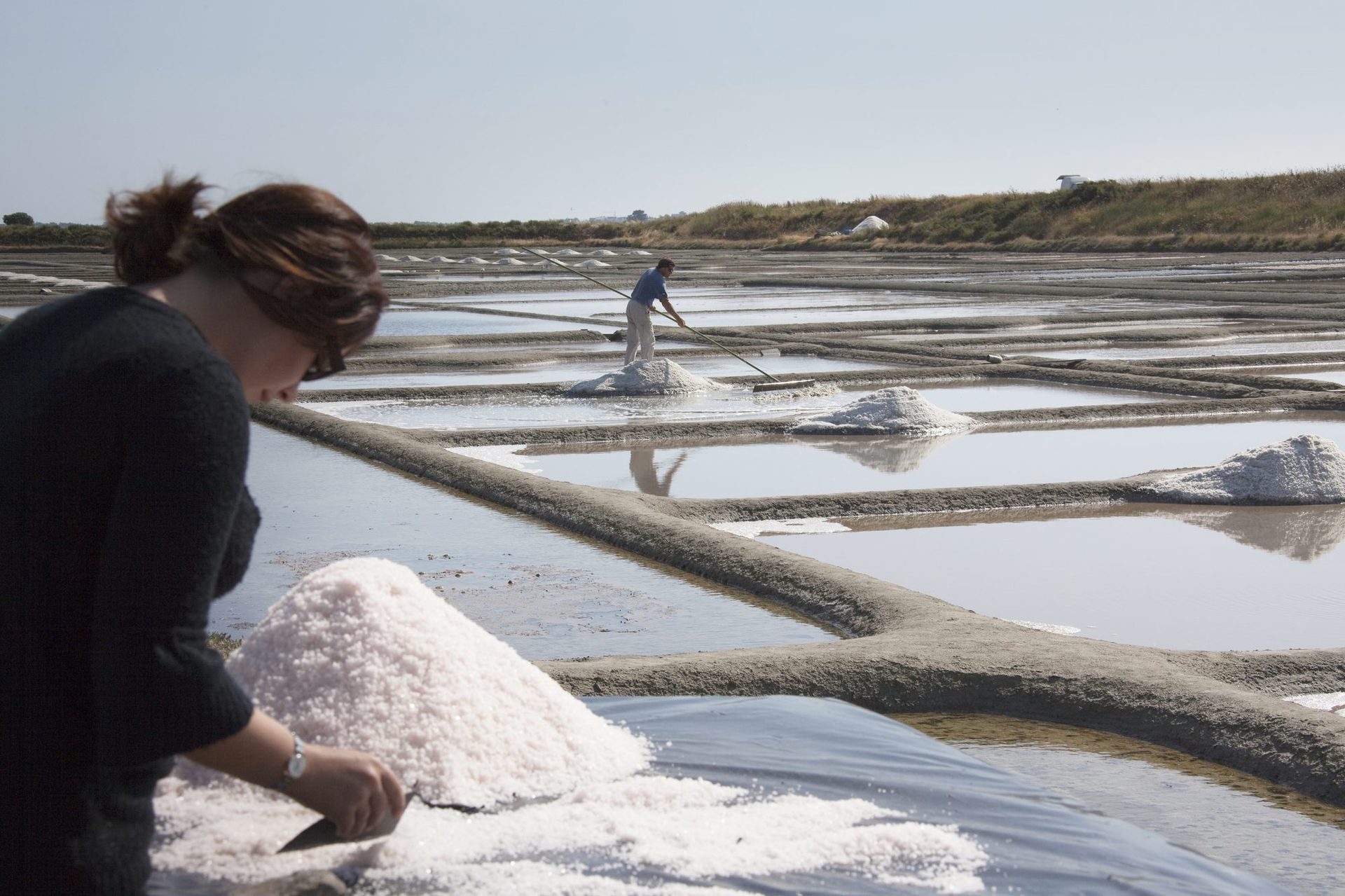
The salt marshes of Guérande
3rd century onward
Salt-making in Roman times
Salt-making on the Guérande peninsula dates back to around the 3rd century. Drawing Atlantic seawater inland and crystallizing it with nothing but the sun and the wind, this traditional method has been practiced since the days of the Roman Empire. By the Middle Ages, salt had become one of Brittany's most important trade goods — known as "white gold."
1840
The peak — 2,600 hectares of salt marshes
In the mid-19th century, the marshes of Guérande stretched across roughly 2,600 hectares, with several thousand paludiers working the salt. They flourished as one of France's largest producers of sun-dried sea salt.
1960–70s
A fight for survival
With the rise of industrially refined salt and the spread of coastal resort development, marsh after marsh faced the threat of being filled in. Traditional salt-making stood at the brink of extinction. The number of paludiers plummeted, and the marshes fell into disrepair.
1972
The salt workers unite
To meet the crisis head-on, the remaining paludiers banded together to form a producers' group. Driven by a fierce resolve to "protect the marshes with our own hands," they laid the foundation of what would become the cooperative — the very beginning of Le Guérandais.
1988
Becoming an agricultural cooperative
The producers' group was formally incorporated as an agricultural cooperative. Each paludier is a member with a voice in how the cooperative is run — a democratic structure that endures to this day. The guiding ideal, "an organization of salt workers, by salt workers," has never changed.
1989
Nature & Progrès certification
The cooperative earned France's most rigorous natural-food certification — formal recognition that its salt is made with no chemical treatment and zero additives.
1991
Label Rouge — France's highest quality mark
Fleur de sel (the "flower of salt") was awarded the Label Rouge (Red Label), France's official mark of the highest quality — the first time the distinction had ever been granted to a salt.
1994
Terre de Sel opens
The cooperative opened a visitor center where guests can explore the marshes. More than 70,000 people visit each year to experience the work of the paludiers and the ecosystem of the salt marshes up close.
1997
Full independence
Breaking free of the major food corporations, the cooperative established a structure in which production, processing, and sales are all managed by the paludiers themselves.
2012
IGP (Protected Geographical Indication)
The salt was granted the EU's Protected Geographical Indication (Indication Géographique Protégée). The name "Guérande" is now legally reserved for salt produced in this region by traditional methods.
2024
PME+ certification — a sustainable small business
The cooperative earned the PME+ label, which recognizes environmental care, social responsibility, and sustainable management. Today it stands as France's No. 2 domestic brand and exports to more than 55 countries.
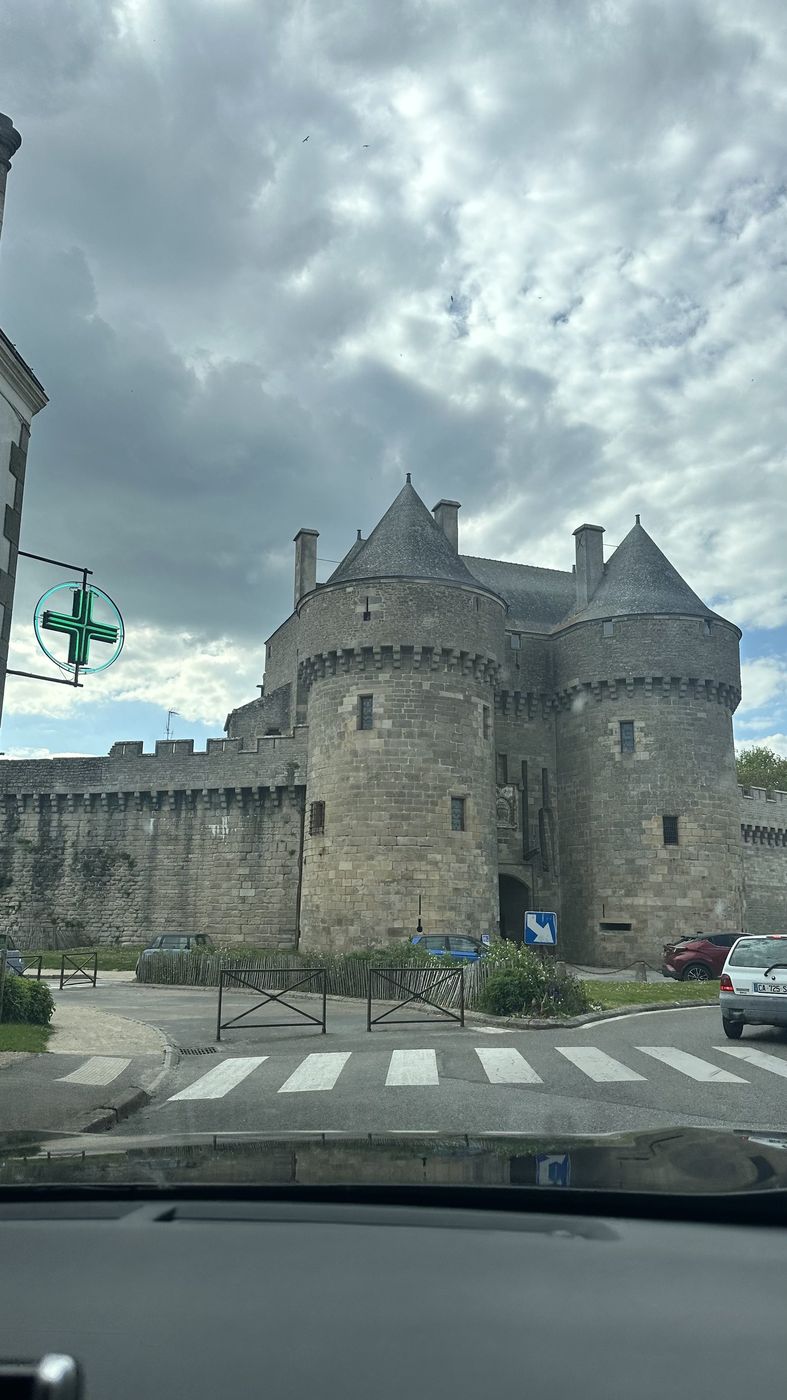
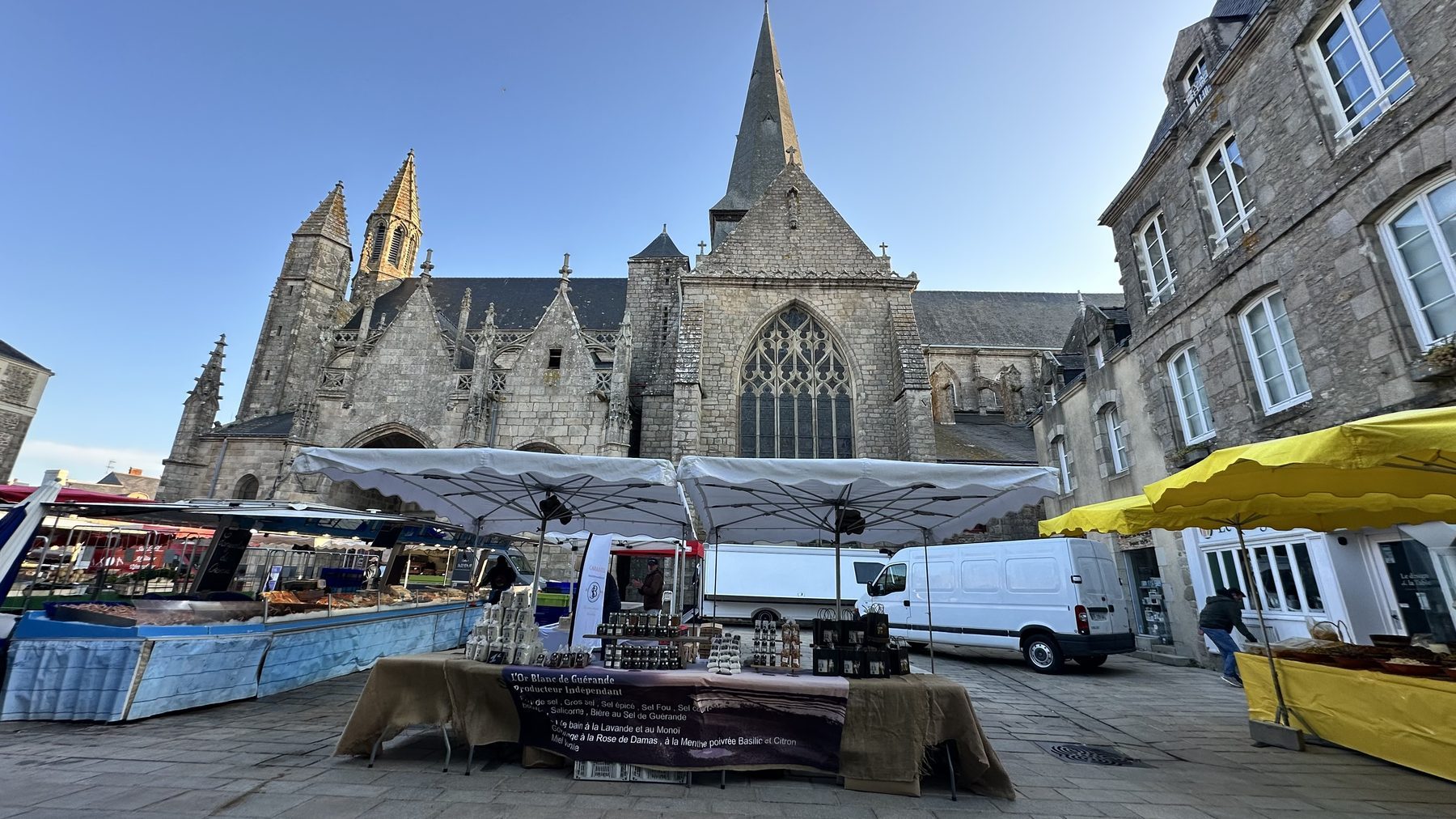
The Town of Guérande

Guérande is far more than its salt marshes. Ringed by medieval ramparts,
this "Town of Art and History" is a jewel of Brittany.

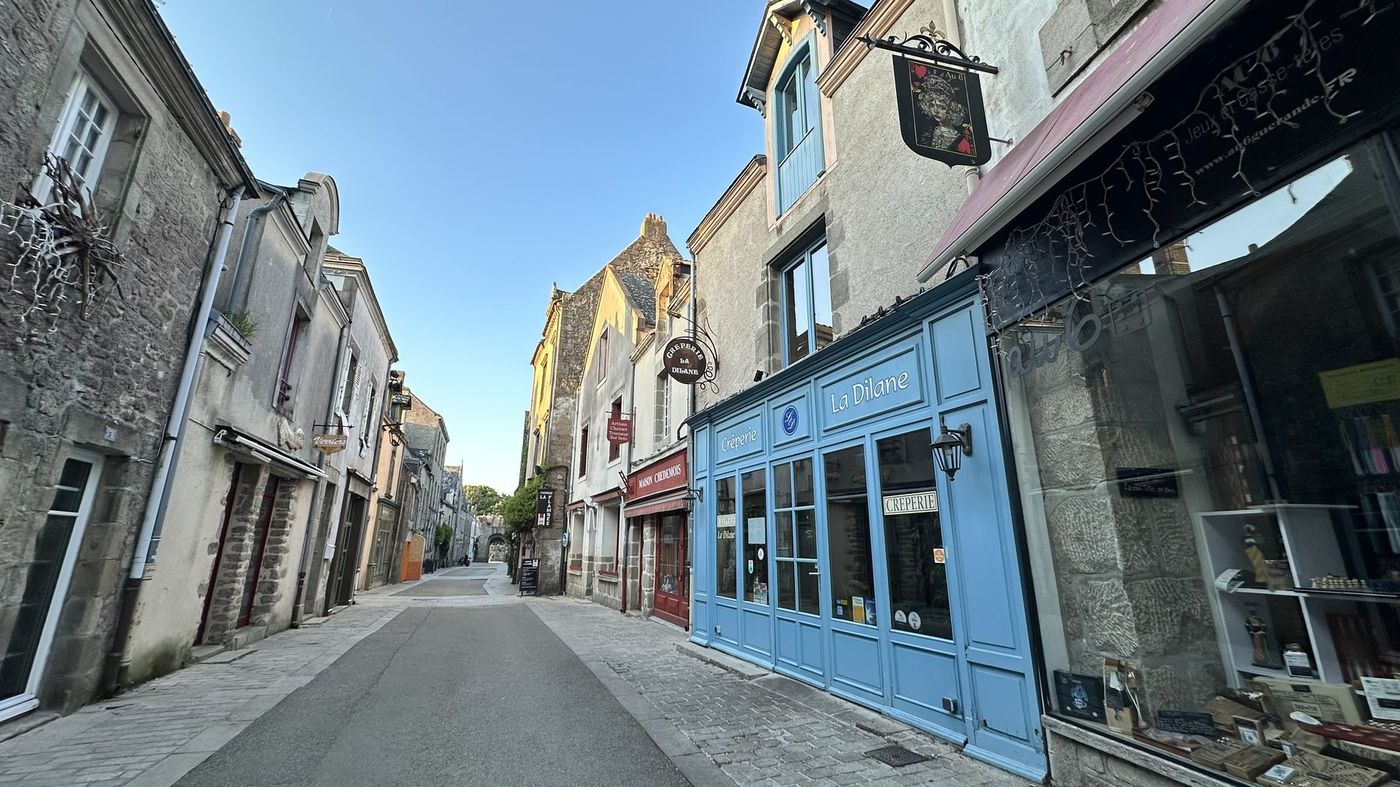
Porte Saint-Michel — the town gate of Guérande The collegiate church of Saint-Aubin and the market A street in the old town of Guérande

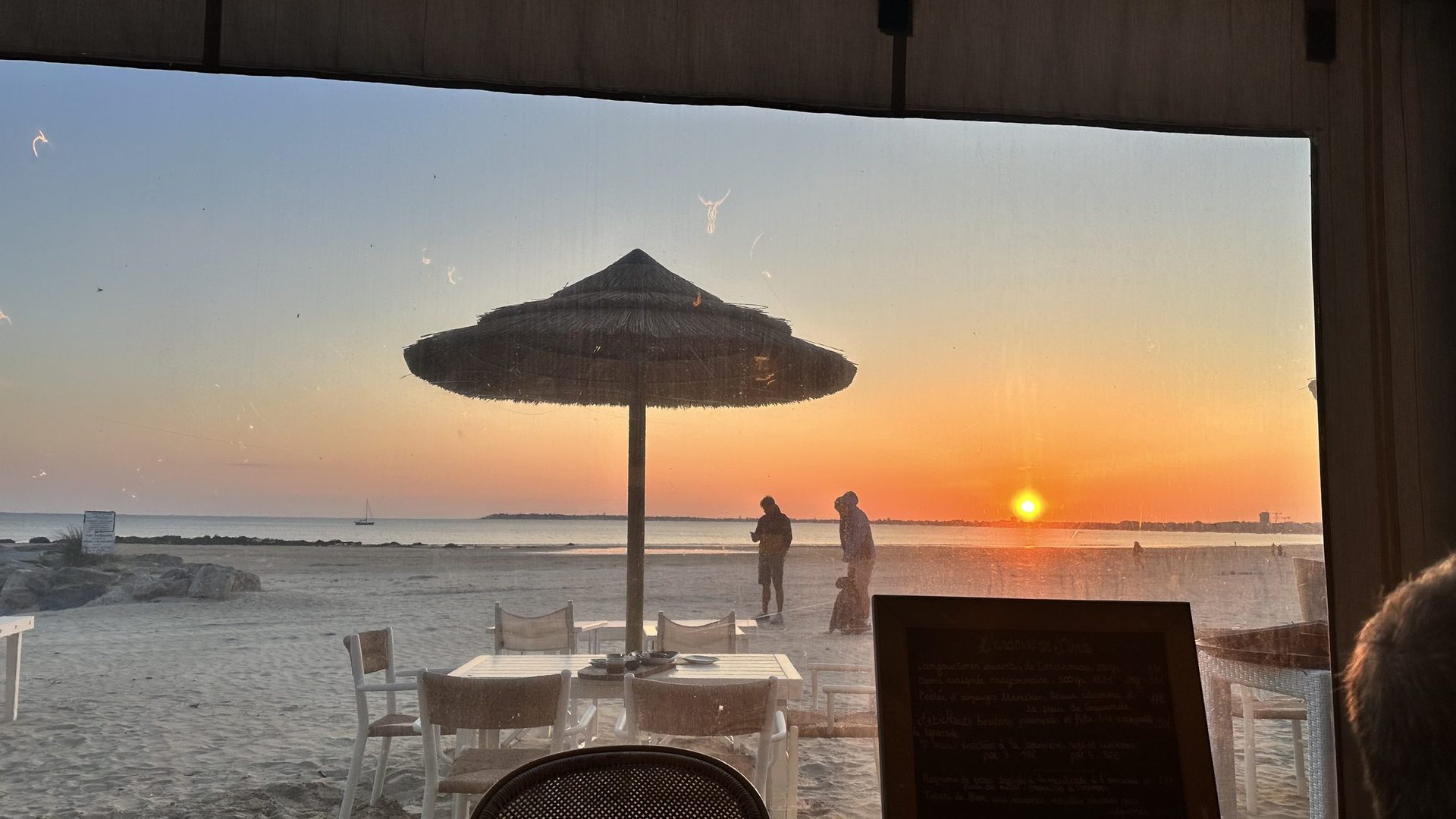
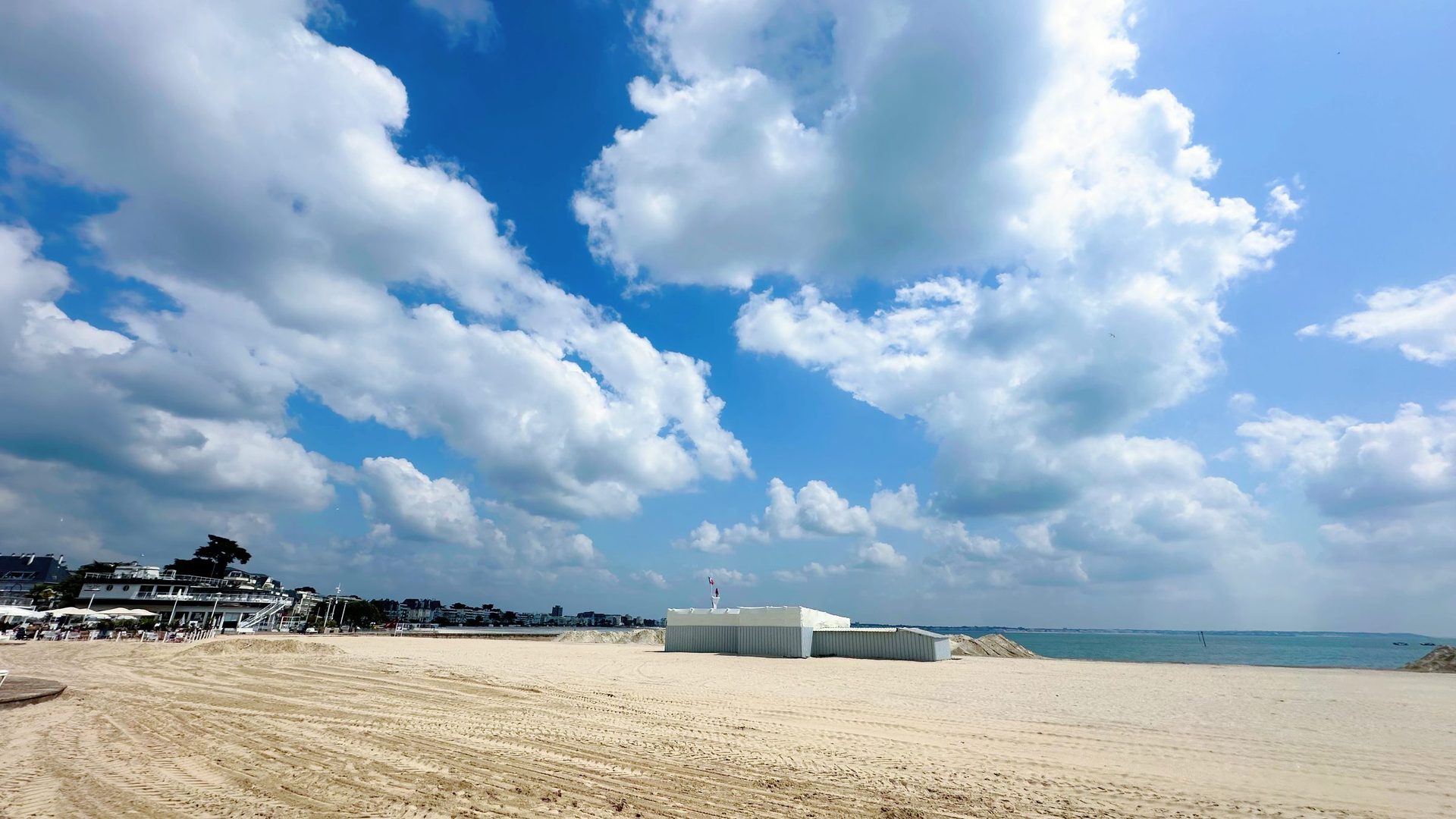
Ramparts standing since the 5th century, the official French Ministry of Culture designation as a "Town of Art and History," and an old town of cobbled streets lined with crêperies and markets. The Atlantic beaches lie just ten minutes away by car — a jewel of Brittany where the salt marshes, the medieval town, and the sea all meet.

Explore the town of Guérande →

The Marshes & Nature

Across 2,000 hectares, the salt marshes are not only a place of salt-making
but a natural treasury nurturing a rich and living ecosystem.

A waterway system unchanged for 1,000 years

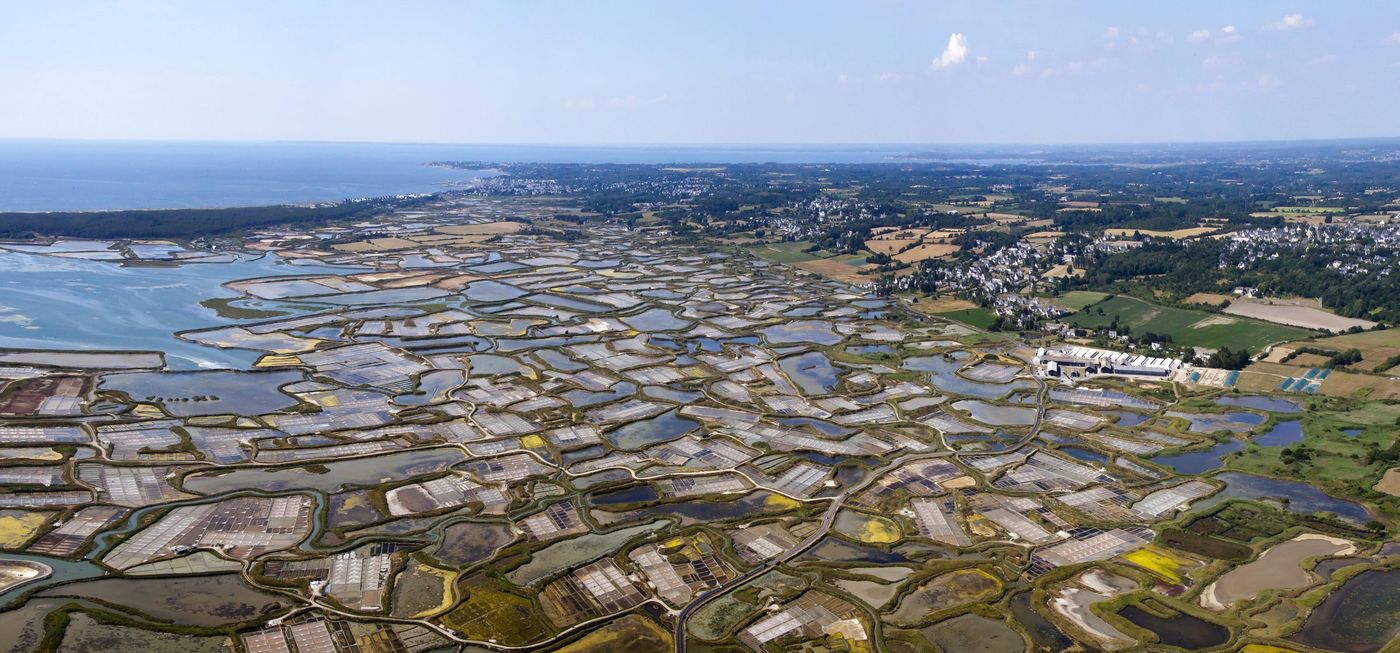
At high tide, the sluice gates open and Atlantic seawater (around 3.4% salinity) flows into the marshes. From there it crystallizes through five distinct stages.

① Vasière
Warmed in the reservoir
→ 4%
② Cobier
Zigzag channels
→ 5%
③ Fares
Shallow concentration ponds
→ 20%
④ Adernes
Final concentration
→ 25–28%
⑤ Œillets
Crystallization & harvest
210g/L or more

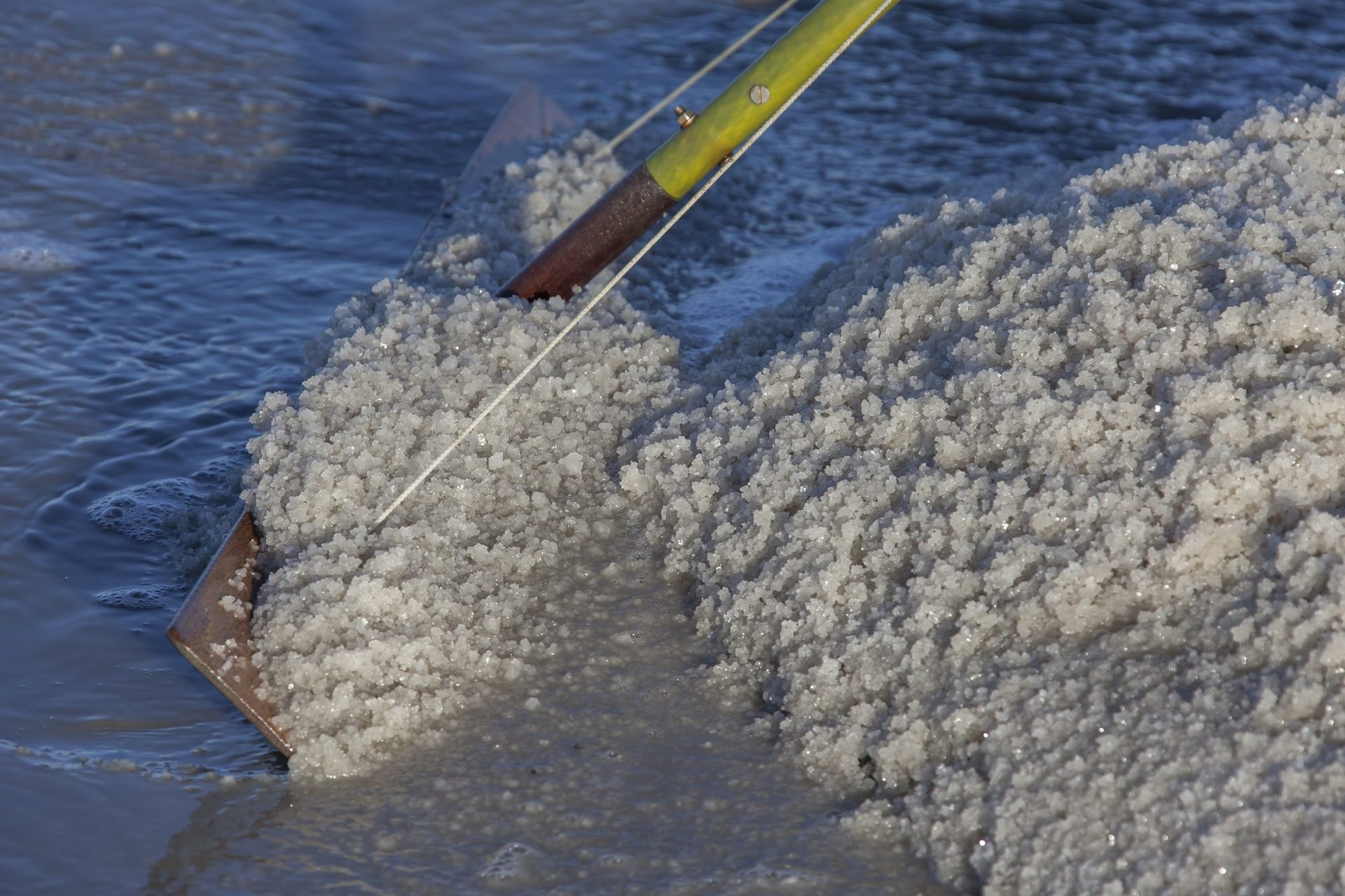
Fleur de sel is skimmed from the surface with a wooden tool called a lousse, while gros sel is gathered from the floor of the marsh with a las. This finely tuned waterway system has been refined by the paludiers since the 9th century.

The waterway system of the salt marshes, seen from above

A haven of biodiversity

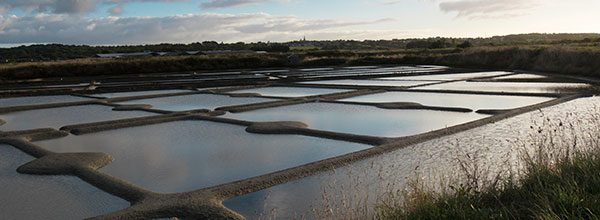
The marshes are not only a place of salt-making — they sustain a rare and precious ecosystem. Birds such as spoonbills, marsh harriers, and blackbirds make their home here, alongside salt-marsh plants like sea lavender, fennel, and the saltwort known as salicornia. Recognized as an internationally important wetland under the Ramsar Convention, the marshes draw worldwide attention as a model of coexistence between people and nature.

The natural landscape of the Guérande marshes — a wetland ecosystem
The salt marshes The salt marshes The salt marshes

Caring for the environment

For the paludiers, protecting the natural environment is the very foundation of their craft. They use no chemicals whatsoever, tending the marshes with nothing but clay and wooden tools. Every winter, during the off-season, they maintain the waterways to keep the marsh ecosystem in balance. "Borrow from nature, and return it to nature" — that is the philosophy behind Guérande salt.

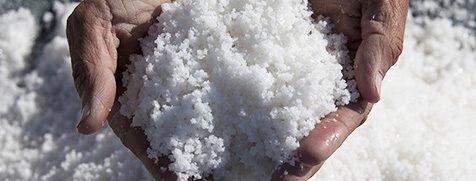
Guérande salt resting in a paludier's palm

"Le sel de Guérande est le fruit d'un dialogue millénaire entre l'homme et la nature."

"Guérande salt is born of a thousand-year dialogue between people and nature."

The Paludiers — Artisans of Salt

A paludier is a craftsman who harvests salt in the marshes of Guérande.
The word means, in French, "a person of the marsh (palud)."

The pride of handwork

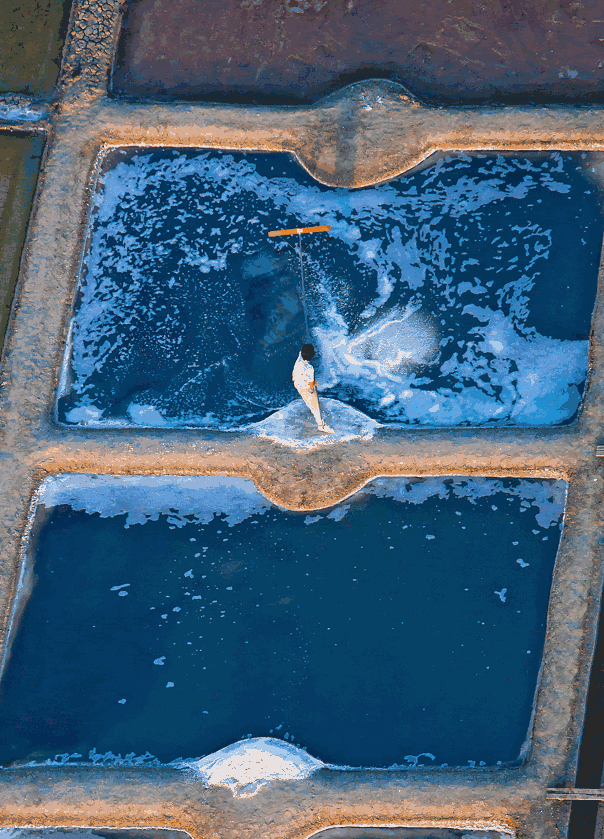
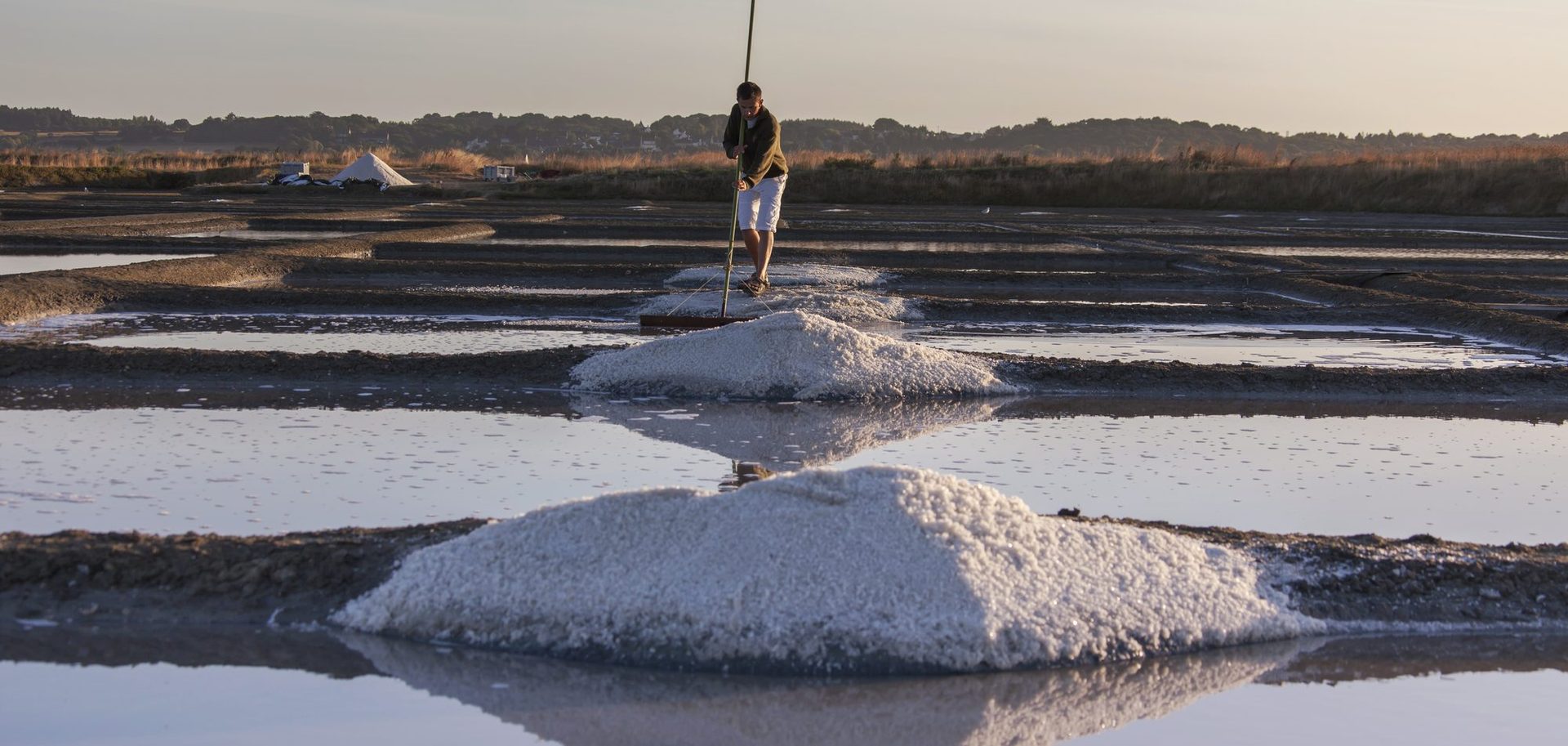
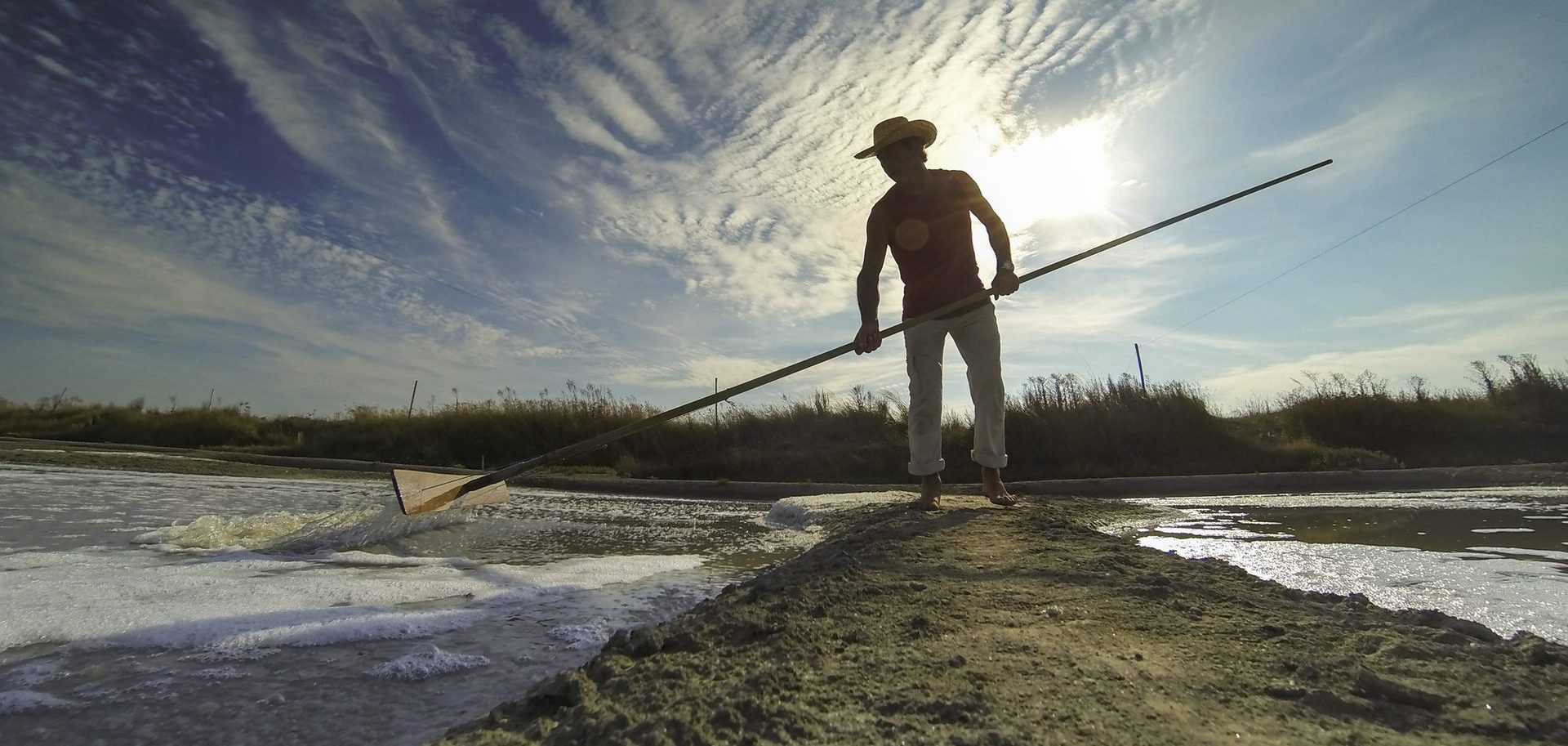
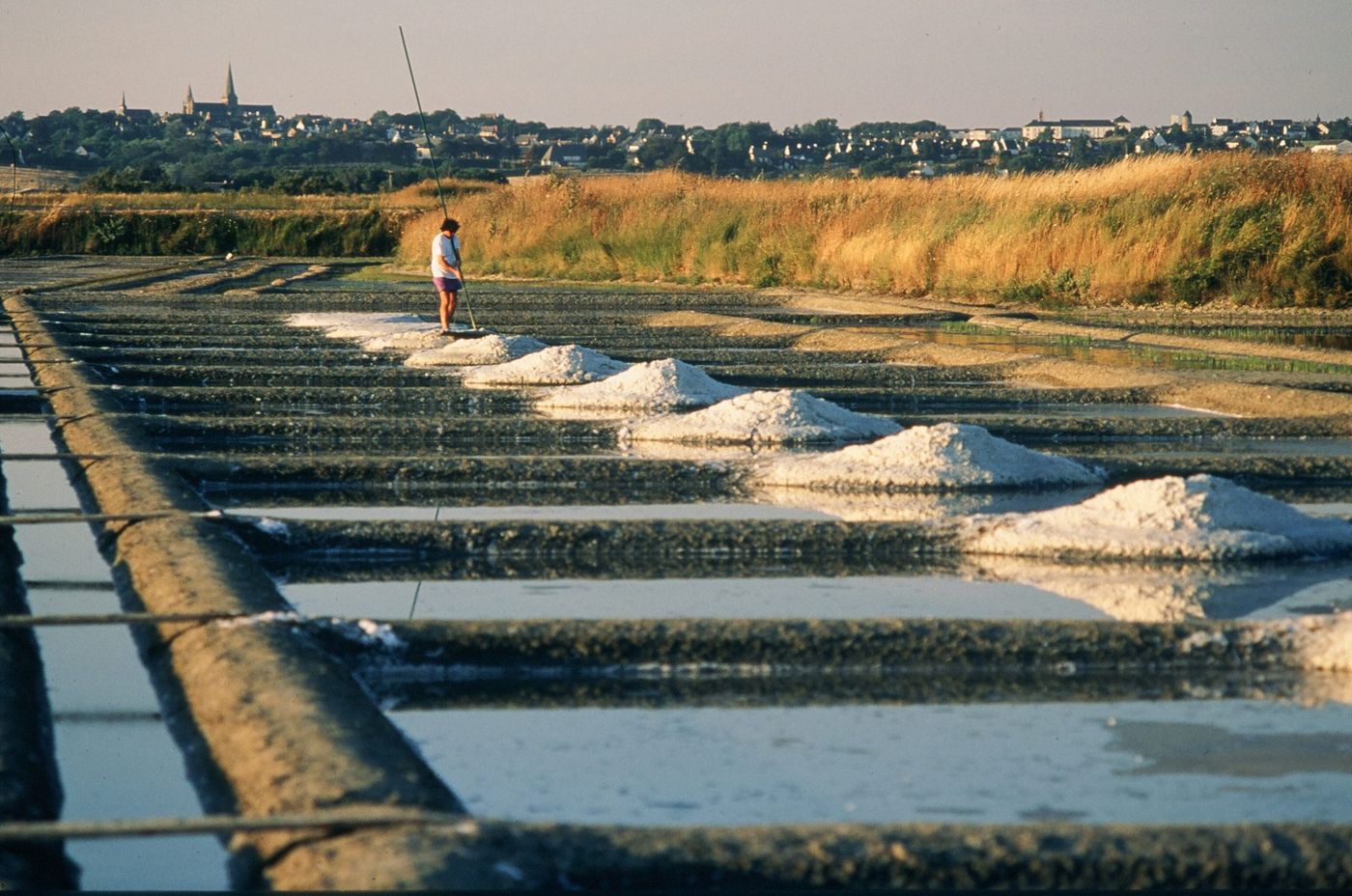
The tools of the paludier have remained unchanged for centuries. With a wooden implement called a lousse, they gently glide across the surface of the marsh, carefully gathering the crystallized salt. Fleur de sel — the flower of salt — calls for especially refined skill: on a windless summer evening, the delicate crystals floating in a thin film on the water are lifted away one layer at a time. Nothing is mechanized; everything depends on the hands, eyes, and experience of the worker.

A paludier working the marshes in the golden hour
225
Paludier members
16%
Women paludiers
46yrs
Average age
12,000t
Annual production

The choice of a cooperative

Le Guérandais is an agricultural cooperative. All 225 paludiers are members, and a 14-person board of directors makes decisions democratically. Time and again the cooperative has turned down offers to sell out or merge with larger companies, holding firm to the conviction that "we protect our own salt ourselves." Profits flow back to the paludiers and are reinvested in training the next generation and maintaining the marshes.

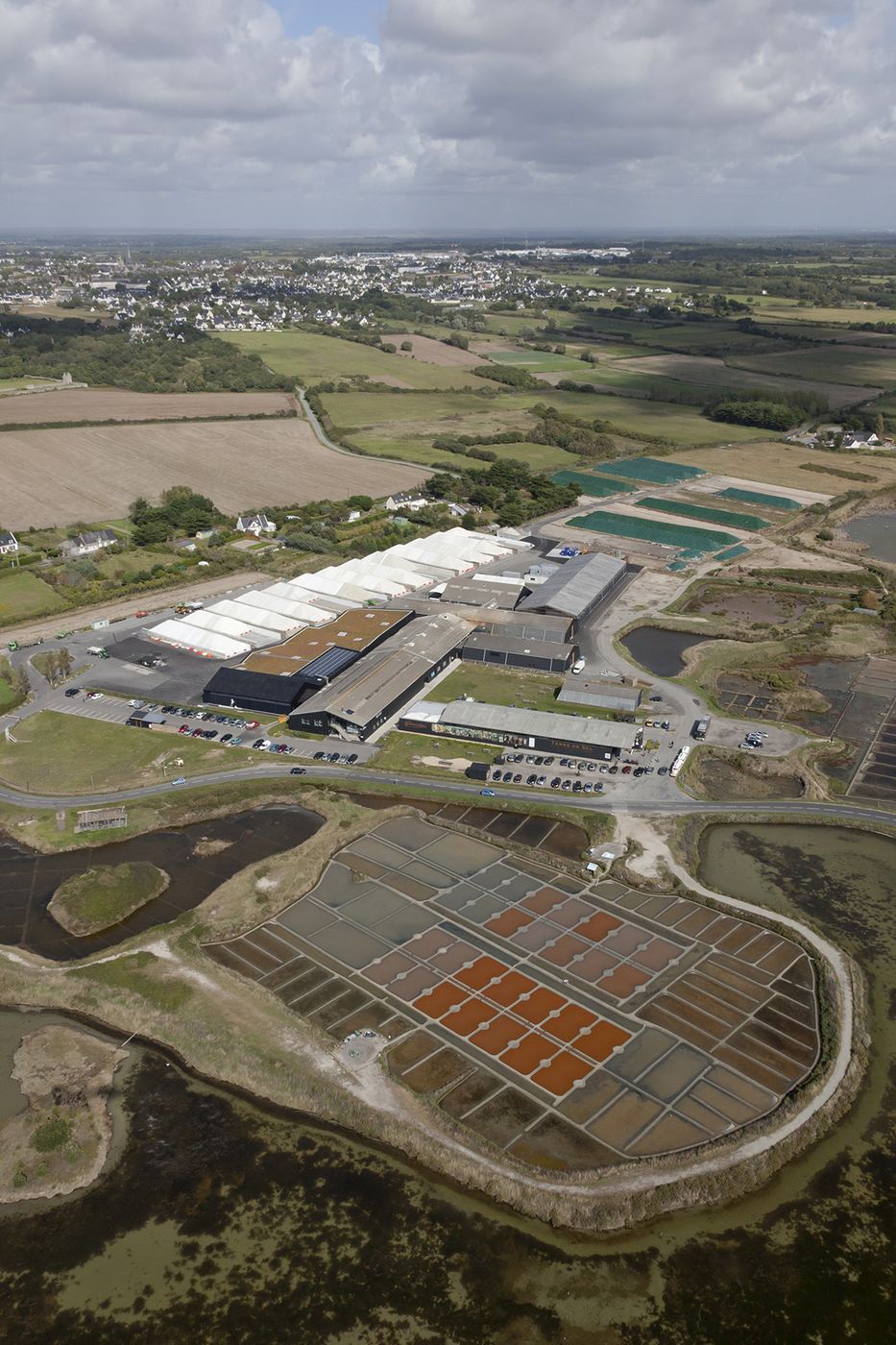
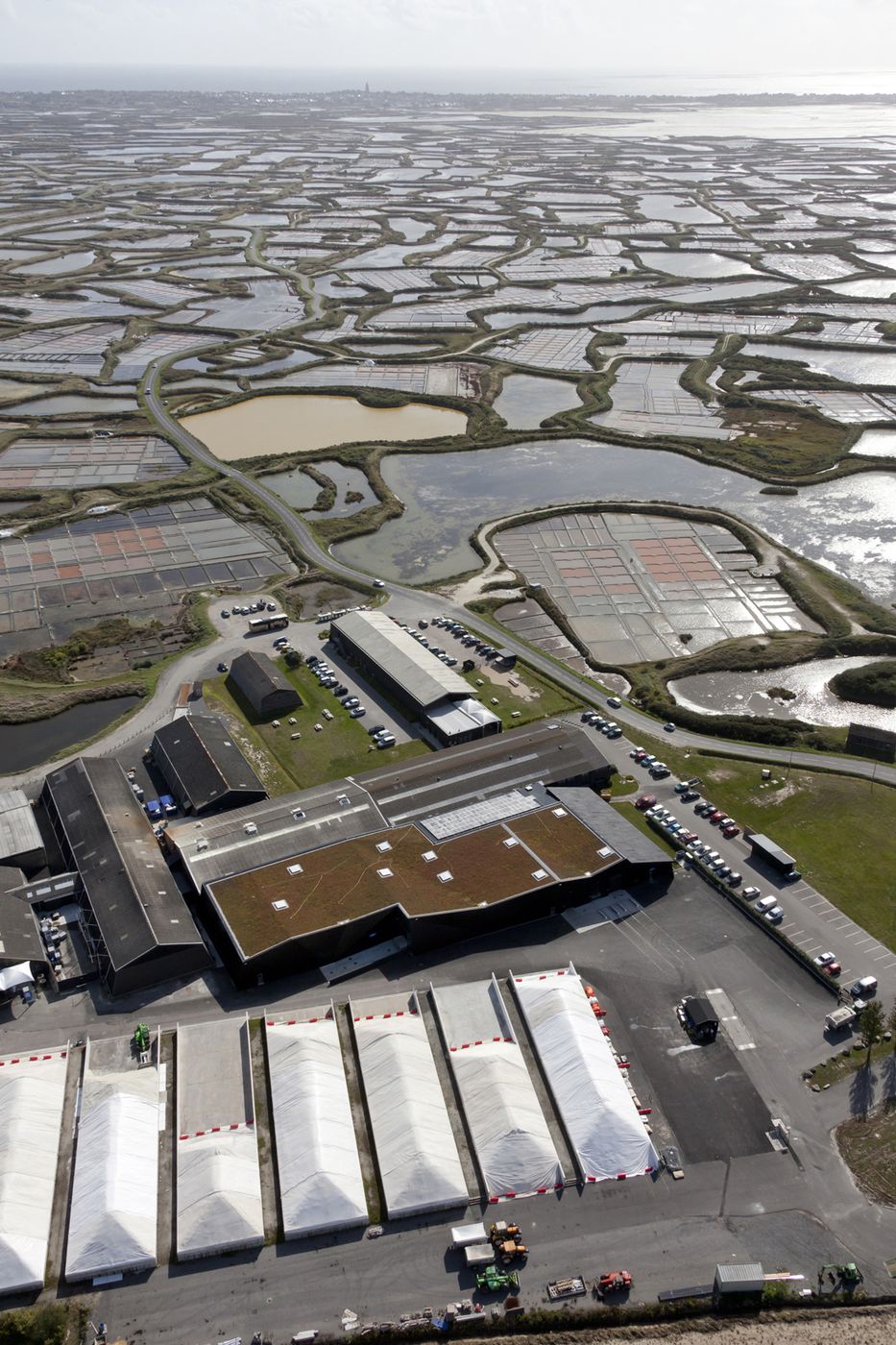
The cooperative facility and the salt marshes
The cooperative facility

Cooperative headquarters

At its headquarters in Guérande, the cooperative employs 75 staff handling quality control, packaging, logistics, and marketing — freeing the paludiers to focus on the harvest.

Terre de Sel

Terre de Sel

The visitor center that opened in 1994. More than 70,000 people come each year to walk the marshes with a paludier as their guide and witness the salt harvest up close.

The bond between NAC and Guérande

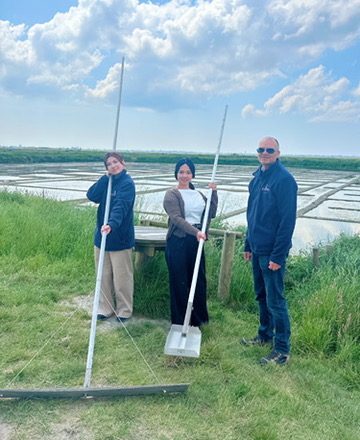
As the official importer and distributor of Le Guérandais salt in Japan, NAC Inc. has been delivering this time-honored salt for nearly 30 years. Built on a relationship of trust with the paludiers and with Mr. Hamon on the ground, we visit the marshes ourselves, handle the harvesting tools, and see the handwork with our own eyes. Not merely to "sell," but to "connect" — that is the role we have chosen.

In the salt marshes of Guérande — the NAC team and Mr. Hamon

Getting to Know Guérande Salt

From the very same marshes come salts of distinct character.
It is the differences in harvest and grain that give each its own qualities.

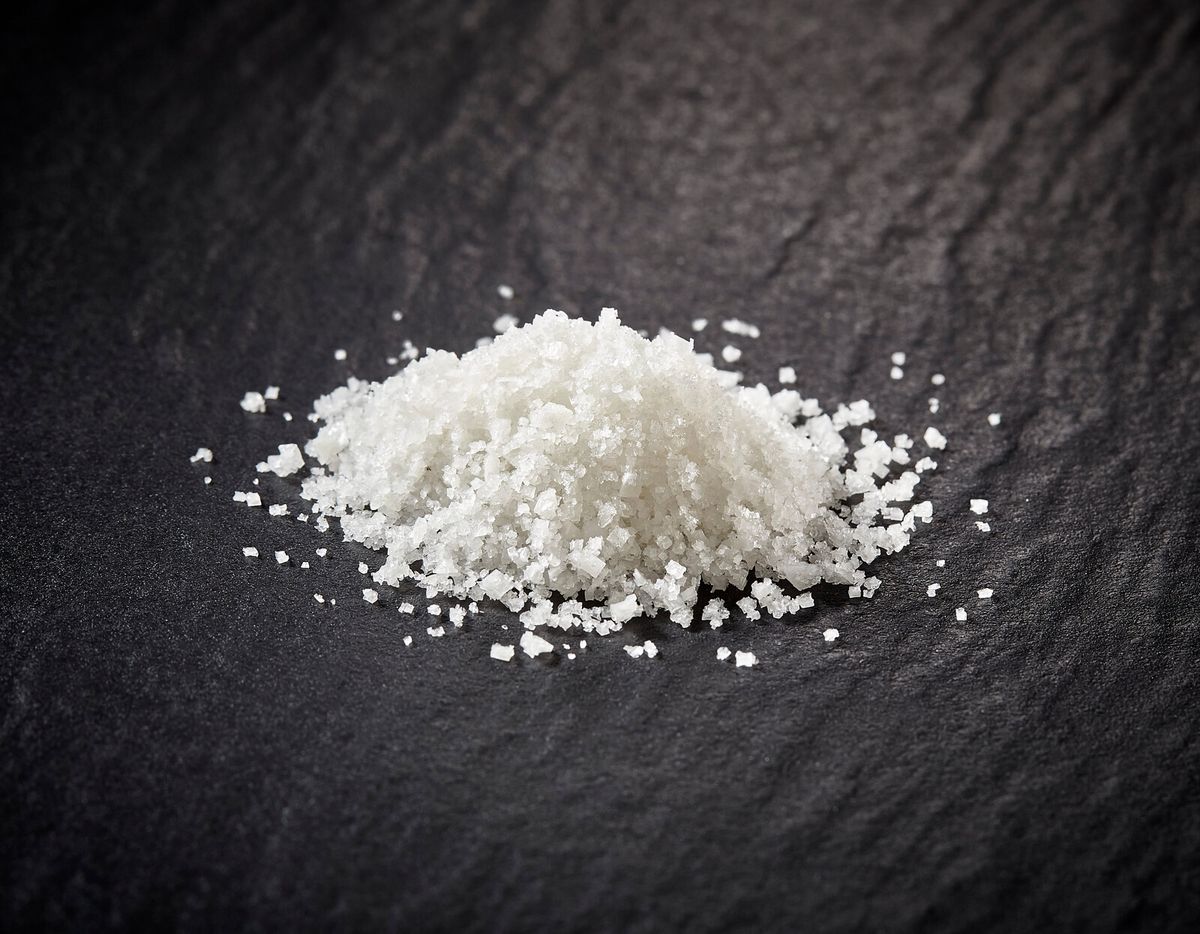
Fleur de sel crystals

Fleur de Sel

Fleur de Sel

The "flower of salt." This finest grade is hand-skimmed from the delicate crystals that float on the water's surface. Prized for its faint, violet-like fragrance and mellow sweetness. A finishing salt.

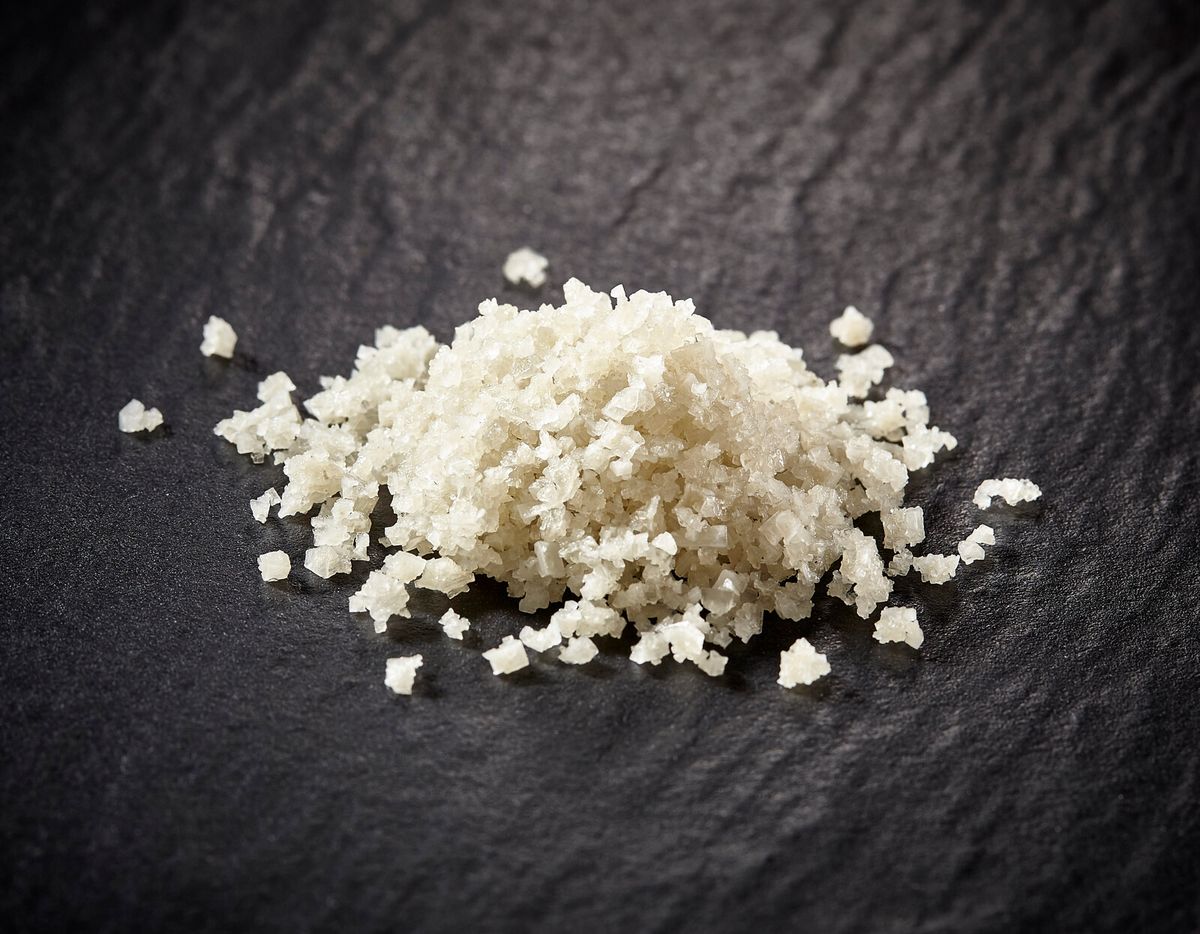
Gros sel gris crystals

Gros Sel Gris

Gros Sel Gris

A coarse salt crystallized on the floor of the marsh. Its grey color comes from clay-derived minerals. Ideal for braises, pasta water, and salt-crust baking. The everyday foundation of Guérande salt.

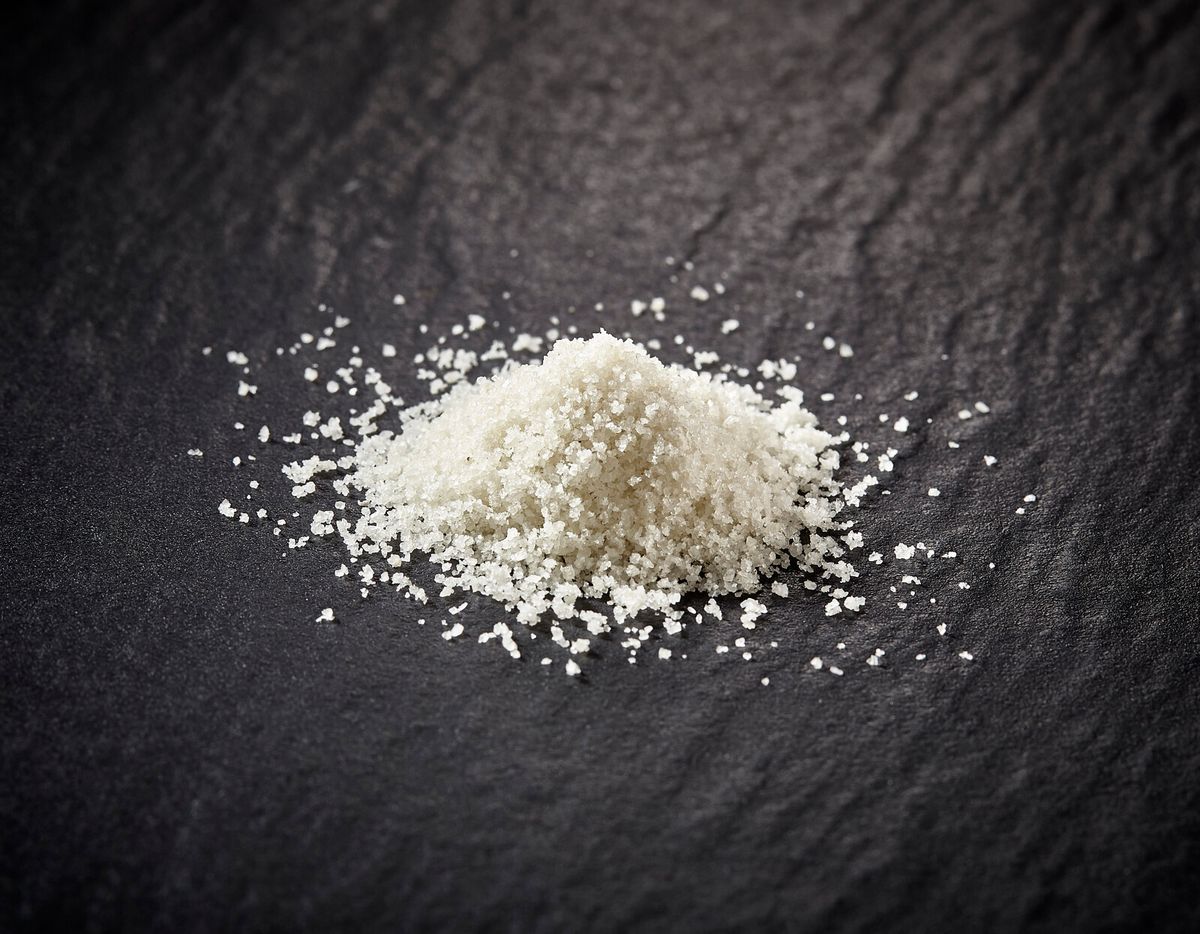
Sel fin crystals

Sel Fin

Sel Fin

A fine-grained salt made by drying and milling gros sel. Its easy-to-use size suits all kinds of everyday cooking, and unlike refined salt, it keeps its minerals intact.

Flavored Salts

Premium flavored salts that pair Guérande salt with carefully chosen ingredients.
A fresh note of character to finish any dish.

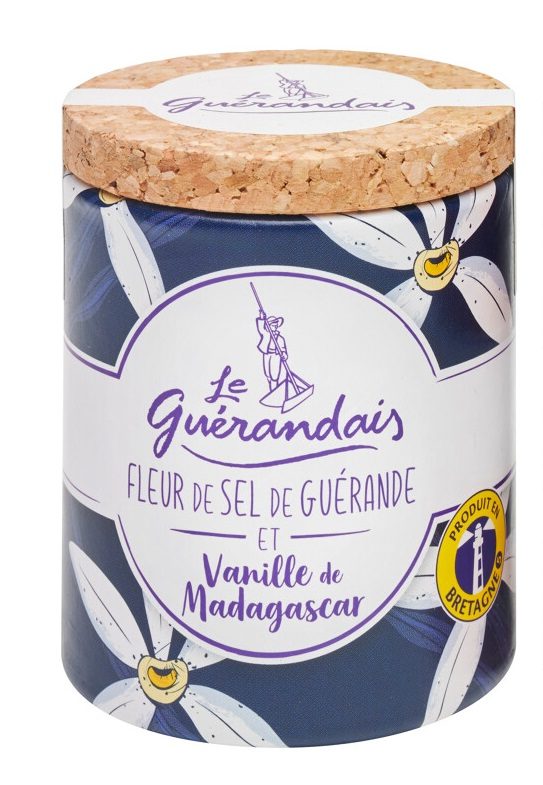
Fleur de sel with vanilla

Fleur de Sel with Vanilla

Fleur de Sel Vanille de Madagascar

An encounter between fleur de sel and world-class vanilla from Madagascar. For when you want the deep, full fragrance of vanilla without too much sweetness. Lovely on seared scallops, a finish for duck, or sprinkled over caramelized banana and vanilla ice cream. 65g, in gift-ready packaging with a cork stopper.

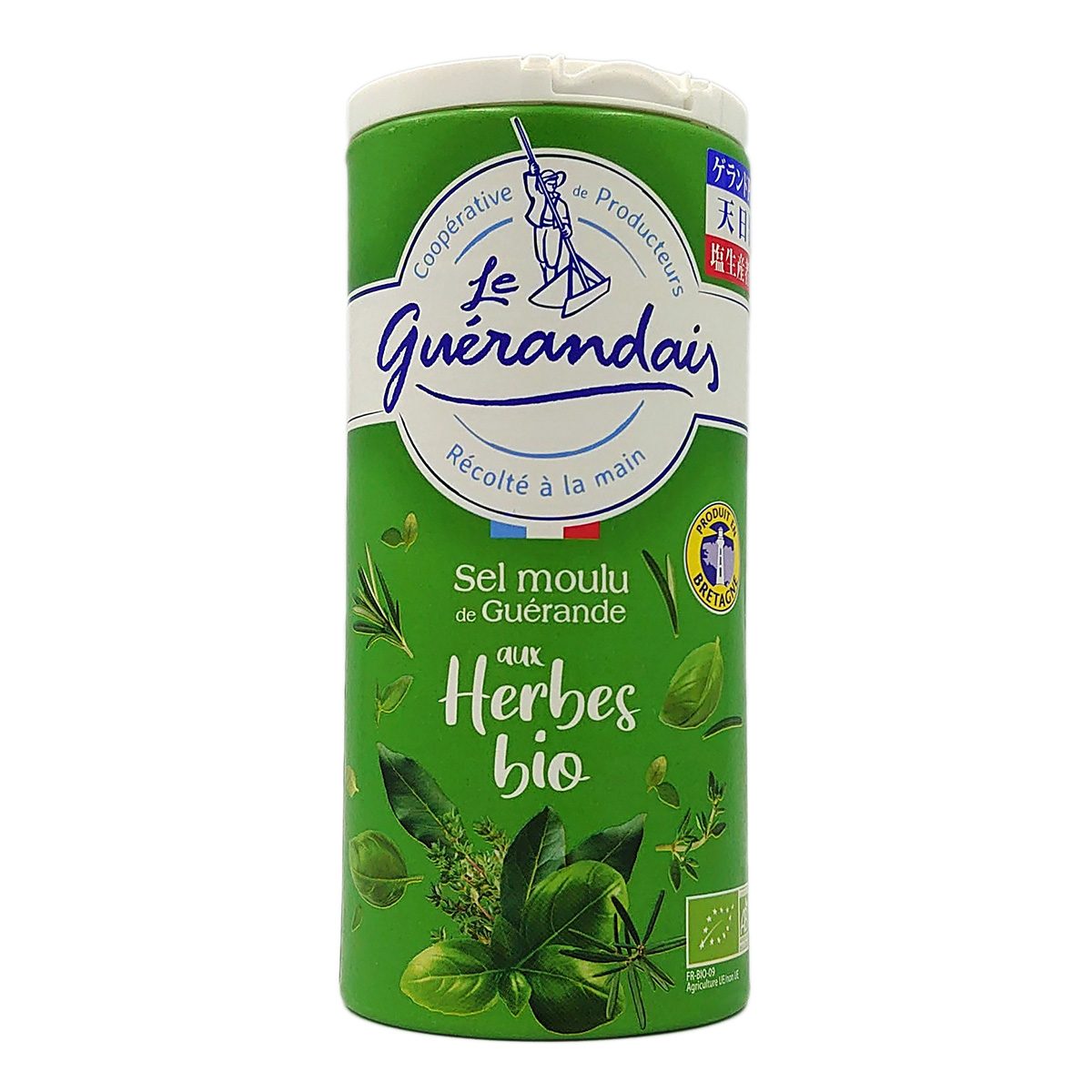
Sea salt with aromatic herbs

Sea Salt with Herbs

Sel Marin aux Herbes Aromatiques

A blend of six organic herbs — parsley, basil, rosemary, thyme, bay leaf, and tarragon. A single shake over grilled meat or fish, or to finish a plate of pasta, brings the scent of Provence. 125g / 250g.

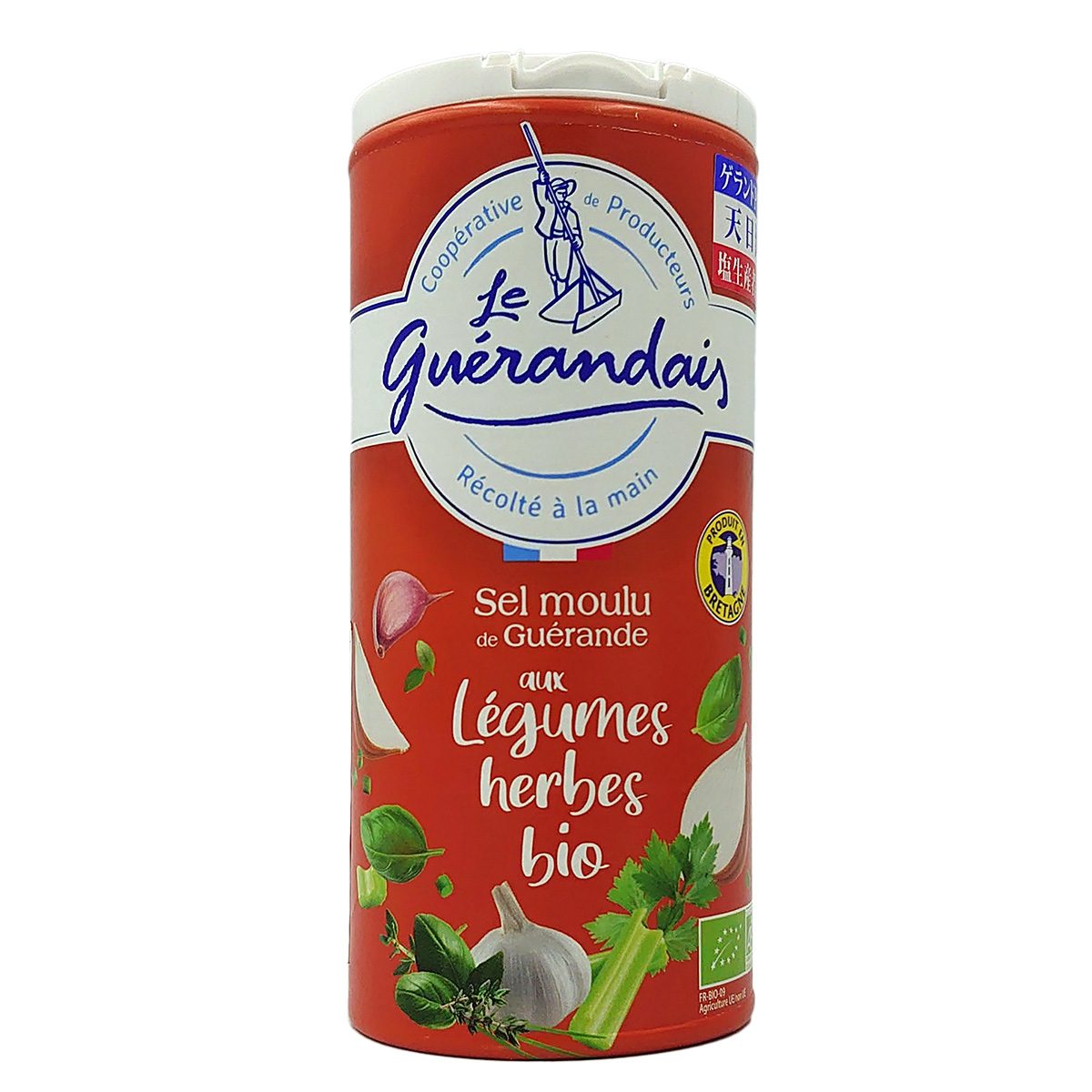
Sea salt with vegetables and herbs

Sea Salt with Vegetables & Herbs

Sel Marin aux Légumes & Herbes

An all-purpose salt of herbs — lovage, chives, basil, marjoram, parsley, rosemary, and thyme — enriched with celery, garlic, onion, leek, and seaweed. Wonderful in soups, braises, and salads, and a fine stand-in for bouillon. 250g.

Eight Certifications

In quality, environmental stewardship, and regional identity,
Guérande salt holds more certifications than any other salt brand in France.

1989

Nature & Progrès

France's oldest natural-food certification. Guarantees no chemical treatment and zero additives.

1991

Label Rouge

France's official mark of the highest quality — the first ever awarded to a salt.

2009 / 2024

Agriculture Biologique

Certifying organic ingredients in the flavored salts since 2009. In September 2024, 67 producers earned organic (BIO) certification.

2012

IGP Guérande

The EU's Protected Geographical Indication, legally protecting the name "Guérande."

2006

IFS Food

An international food-safety standard, certifying the highest level of production and hygiene control.

2024

PME+

A certification for sustainable small businesses, recognizing environmental care and social responsibility.

Produit en Bretagne

A Brittany regional certification, recognizing contribution to the local economy and employment.

APROSELA

The association for traditional artisanal salt, which oversees the quality standards of Label Rouge and IGP.

Frequently Asked Questions

Answers to the questions our customers ask most often about Guérande salt.

Does the salt have a best-before date?+

Under both Japanese and French law, salt is considered to have no best-before date. Since 2019, France has dropped best-before labeling on salt to help reduce food waste. Salts containing herbs or seaweed, however, do carry a best-before date, printed on the base of the container in day/month/year order.

How should I store it?+

We recommend keeping it at room temperature, in a dark place. Gros sel (coarse salt) in particular should not be refrigerated — prolonged chilling can cause a chemical change that hardens it into a solid block. The 5kg bags may weep a little moisture, but this does not affect quality.

How is sun-dried sea salt made?+

It is drawn from seawater using only the heat of the sun and the wind — a traditional method practiced since the 9th century. Atlantic seawater flows into the marshes and grows gradually more concentrated as it passes through the channels. Once it reaches a salinity of 25–28%, the salt crystallizes. The paludiers harvest it all by hand, using wooden tools.

I sometimes find tiny particles in the salt — why?+

Because the salt is harvested from natural marshes, on rare occasions a natural particle (such as a fragment of seaweed) may find its way in. Most solid matter settles out as the seawater travels through the long channels, but since the salt is never washed or refined, it cannot be removed entirely. We do carry out visual inspection to remove foreign matter, as well as mechanical metal detection. Please regard it as a sign of salt left in its natural state.

Why does gros sel have such a high moisture content?+

After harvesting, gros sel is left to dry naturally in a salt store (the salorge), but its moisture content varies (around 5–9%) depending on where in the batch it is bagged. This is because we prioritize keeping it as natural as possible. Sel fin, by contrast, undergoes drying and milling, so almost all of its moisture is removed.

Why do gros sel and sel fin have different sodium chloride content?+

Gros sel contains about 7–8% moisture, so its sodium chloride content per 100g is relatively lower (88.3%). Sel fin, dried until it holds almost no moisture, shows a higher figure of 96.6%. The salt itself is the same — you can simply choose between them according to how you intend to use it.

How does it reach Japan?+

The salt is loaded into containers at the warehouse of the Guérande salt cooperative in France and shipped to Japan by sea. As the official importer ever since Japan's salt monopoly was abolished in 1997, NAC Inc. carries out quality inspection and applies Japanese-language nutrition labeling.

Bring Guérande salt
to your own table.

Enjoy a salt left wholly natural, refined over 2,000 years of history.