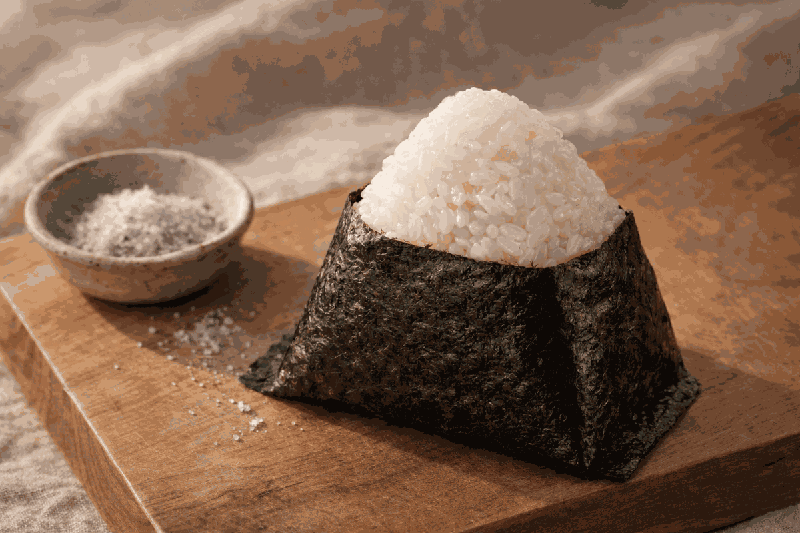
When the salt is good, the rice ball needs nothing more. Guérande sel fin coaxes out the natural sweetness of the rice — simplicity at its purest.
INGRÉDIENTS
- Freshly cooked rice … 300g
- Sel fin … 1/2 tsp (for salting the hands)
- Toasted nori … 2 sheets
- Filling of your choice … to taste
PRÉPARATION
- Turn the freshly cooked rice into a bowl and fluff it gently with a paddle, using a cutting motion to release some of the steam.
- Lightly wet your hands with water, then spread a pinch of sel fin across your palm.
- Take 150g of rice in your hand and tuck the filling into the center.
- Shape with three presses. Use a light touch so the grains stay whole — think "gathering," not "squeezing."
- Wrap in toasted nori and serve.
CHEF'S POINT
Salt the hands, not the rice. Spreading the salt on your palm before shaping puts the seasoning only on the surface. The first bite brings the mineral note of the sel fin, and the sweetness of the rice follows right behind — that order is everything. The rice should be just-cooked, with only a little of the steam let off.
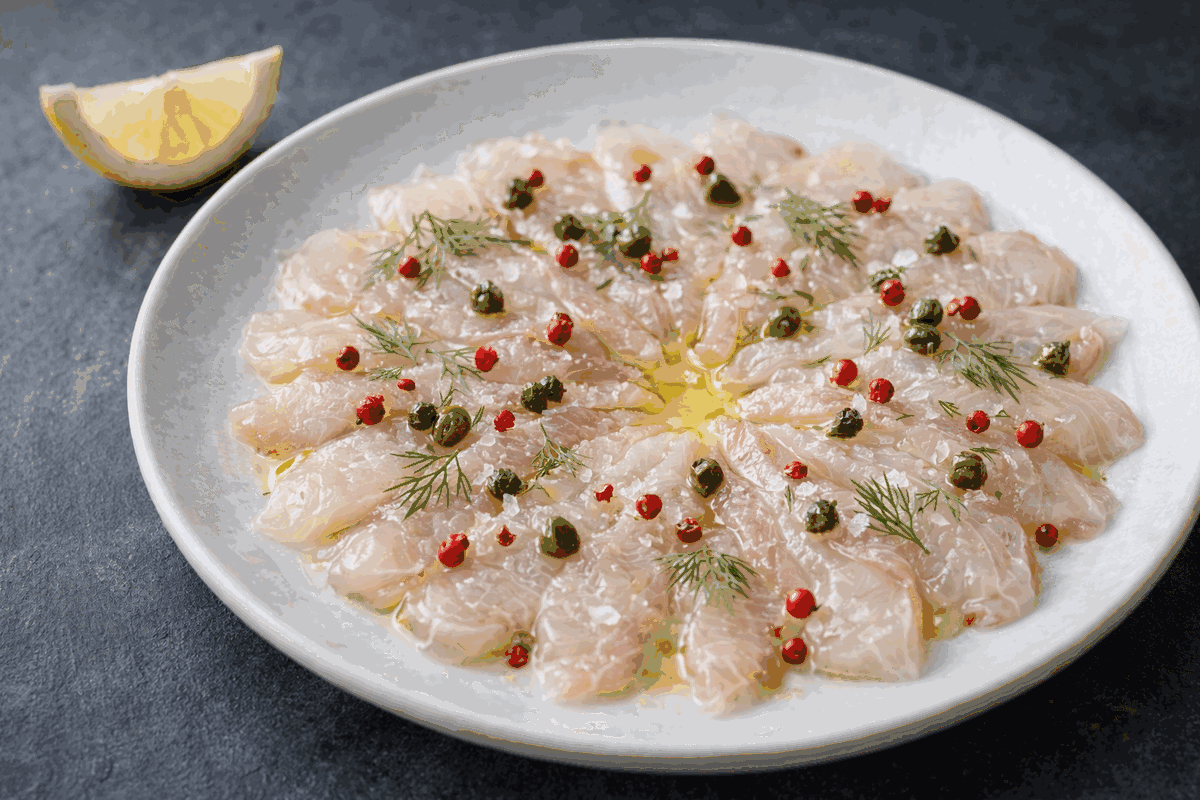
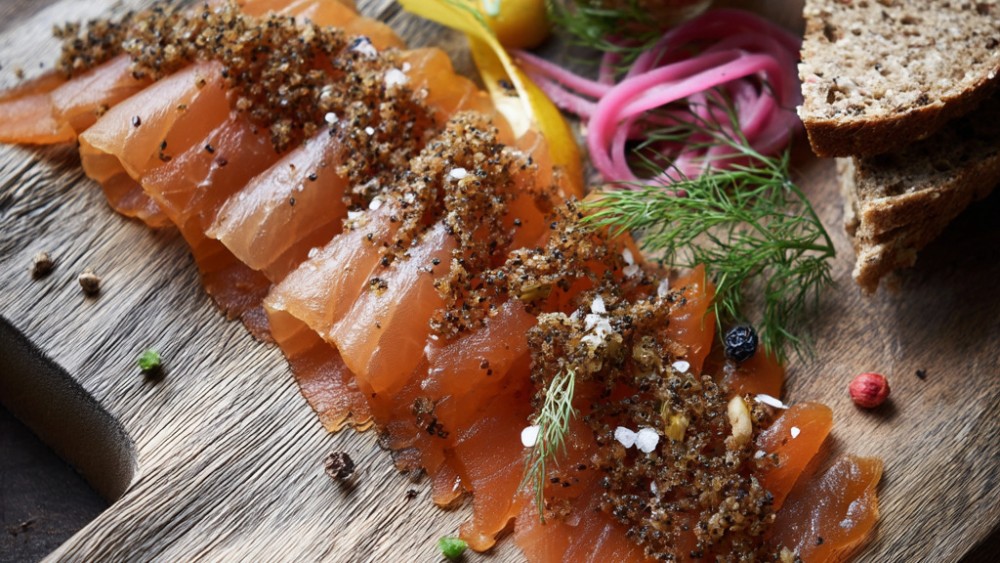
Over fresh sea bream, the delicate crystals of fleur de sel slowly dissolve. A single pinch draws out the flavour of the fish — the simplest of luxuries.
INGRÉDIENTS
- Sea bream (sashimi-grade block) … 150g
- Fleur de sel … 1/3 tsp
- Extra-virgin olive oil … 2 tbsp
- Lemon juice … 1 tbsp
- Pink peppercorns … a little
- Dill or microherbs … to taste
- Capers … 1 tsp
PRÉPARATION
- Slice the block of sea bream thinly on the bias (about 2mm). Arrange the slices in a fan on a chilled plate.
- Whisk the olive oil and lemon juice together and drizzle over the fish.
- Scatter over the capers and pink peppercorns.
- Just before serving, pinch the fleur de sel between your fingers and place a little over each slice.
- Garnish with dill or microherbs and serve.
CHEF'S POINT
Always add fleur de sel at the very last moment. Salt it too early and osmosis draws moisture from the fish, ruining the texture you worked for. Pinch the crystals and "place" two or three on each slice. The moment they crack between your teeth is the soul of this carpaccio. And chill the plate in the fridge beforehand.
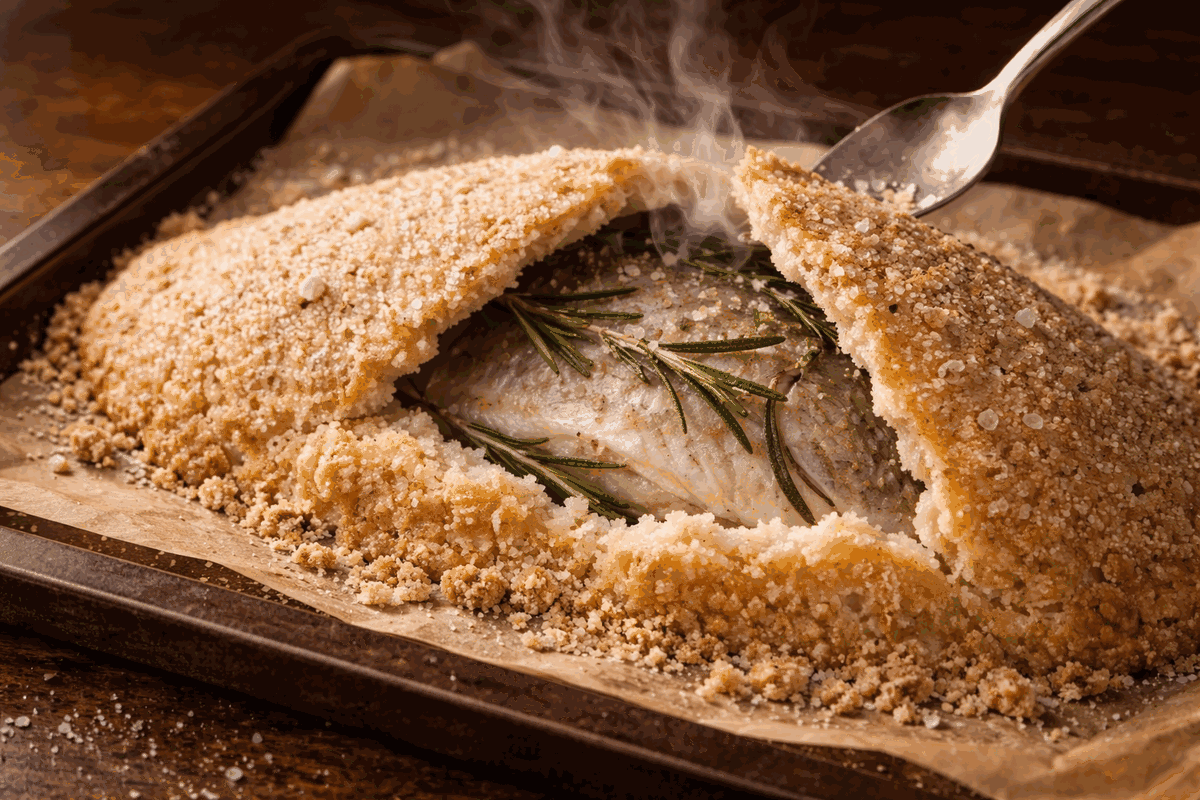
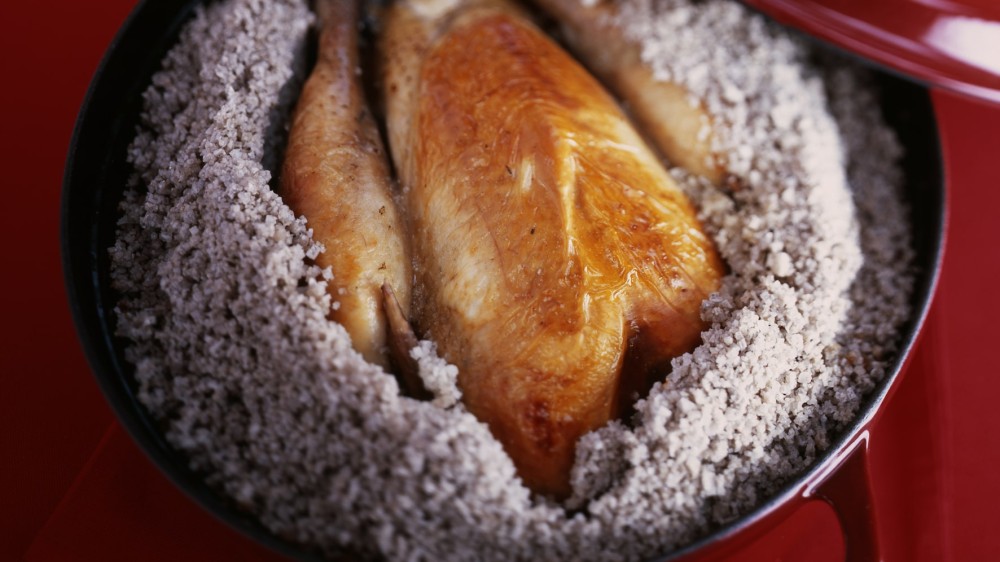
The fish is sealed completely in gros sel and roasted in its own steam. The aroma that escapes the moment you crack the crust is something only Guérande salt can give.
INGRÉDIENTS
- Whole sea bream … 1 (about 500g)
- Gros sel … 1kg
- Egg whites … 2
- Rosemary … 2 sprigs
- Lemon (sliced) … 4 slices
- Garlic … 2 cloves
PRÉPARATION
- Preheat the oven to 200°C. Gut the sea bream and stuff the cavity with lemon, rosemary, and garlic.
- Mix the gros sel and egg whites well, until they hold together with a damp, packable consistency.
- Line a baking tray with parchment and spread a third of the salt in the shape of the fish. Lay the sea bream on top.
- Cover the fish completely with the remaining salt, sealing every gap. Press firmly by hand to compact the crust.
- Bake at 200°C for 30–35 minutes, until the crust takes on a faint color.
- Crack the crust open at the table to serve.
CHEF'S POINT
The moisture content of gros sel makes all the difference. Dry refined salt won't set into a proper crust, and ordinary coarse salt has grains so uniform that steam escapes too easily. Guérande gros sel has just the right variation in grain size to build the sealed chamber that gentle steam-roasting needs. Adjust the firmness with the egg white — a little less, and the crust shatters dramatically at the table.
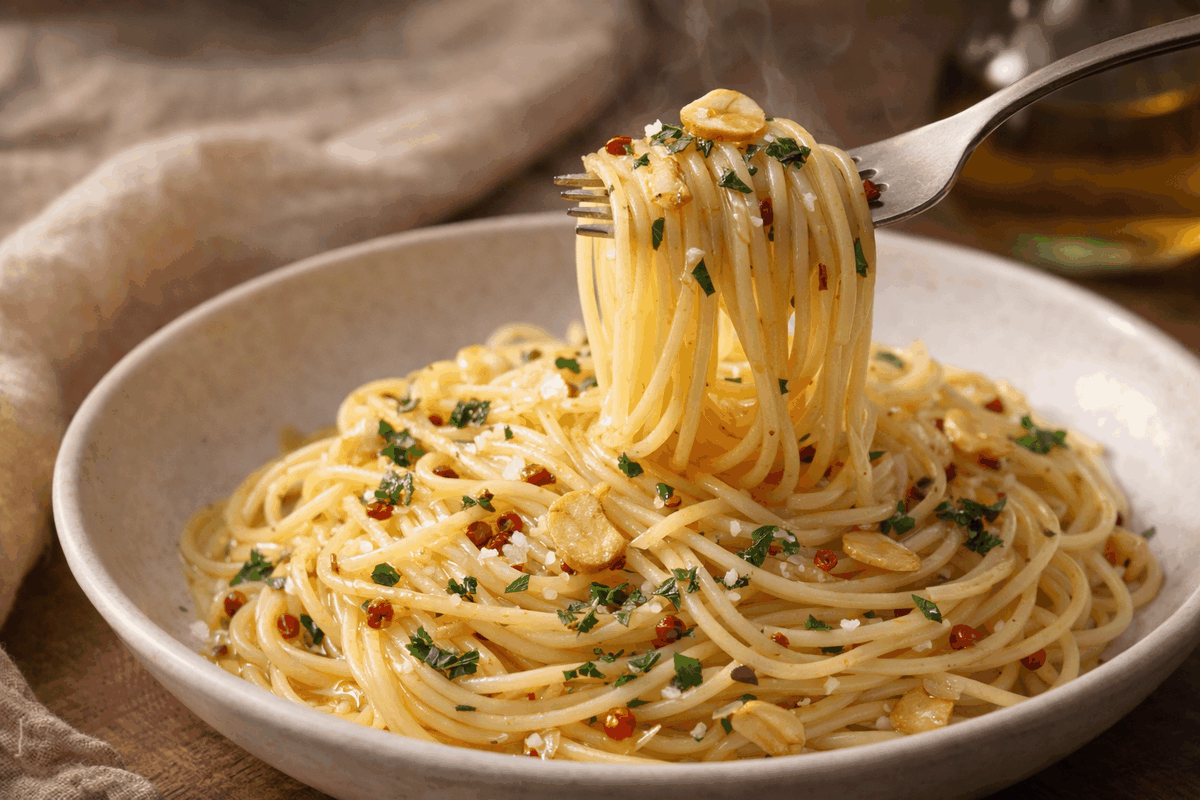
Gros sel in the cooking water, fleur de sel to finish. Two salts, each in its place — a chef's touch that elevates the most stripped-back pasta there is.
INGRÉDIENTS
- Spaghetti … 200g
- Gros sel … 20g (for 2L of cooking water)
- Fleur de sel … a pinch (to finish)
- Garlic … 3 cloves
- Dried chili … 1
- Extra-virgin olive oil … 4 tbsp
- Flat-leaf parsley … to taste
PRÉPARATION
- Bring a large pot of water (2L) to the boil and add 20g of gros sel. Cook the spaghetti for one minute less than the package time.
- Thinly slice the garlic and put it in a frying pan with the olive oil. Warm gently over low heat to draw out the aroma. Once golden, add the chili.
- Add two ladles of pasta water to the pan and emulsify.
- Transfer the cooked pasta to the pan and toss quickly with tongs. Add more pasta water if it needs loosening.
- Plate up, scatter over the parsley, and finish with a pinch of fleur de sel.
CHEF'S POINT
The cooking water should be "a touch less salty than seawater" — about 10g of gros sel per liter. Boiling pasta in Guérande gros sel gives the noodles a roundness you simply don't get from refined salt. Then the finishing fleur de sel goes on after the emulsion is done. Building the salt in layers means every bite shifts a little. The simpler the dish, the more honestly the quality of the salt shows.
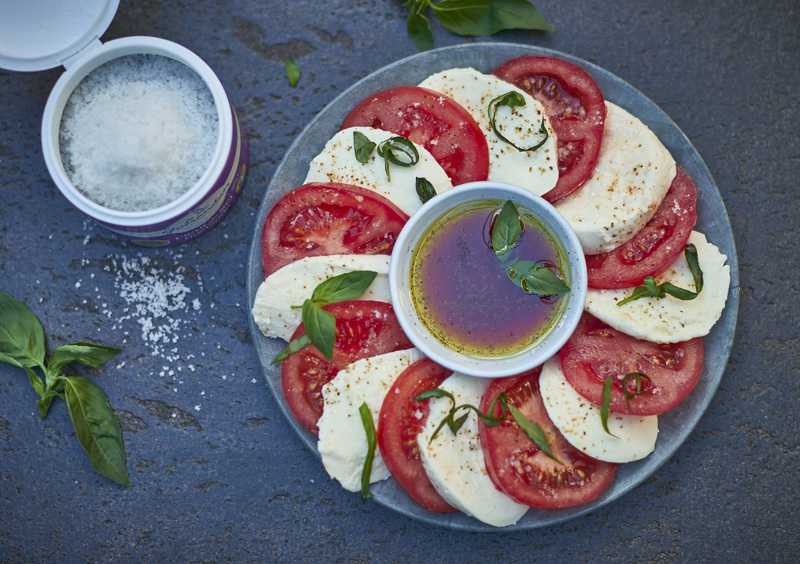
The sweetness of ripe tomato, the milkiness of mozzarella, the perfume of basil. Fleur de sel draws all three into a single, unified flavor.
INGRÉDIENTS
- Ripe tomatoes (medium) … 2
- Mozzarella … 1 ball (125g)
- Fleur de sel … 1/4 tsp
- Extra-virgin olive oil … 2 tbsp
- Fresh basil … 6–8 leaves
- Black pepper … a little
PRÉPARATION
- Slice the tomatoes into 1cm rounds, and the mozzarella to the same thickness.
- Arrange tomato and mozzarella alternately on a plate, tucking a basil leaf between each.
- Drizzle olive oil over the whole dish.
- Just before serving, scatter fleur de sel evenly over the top and grind over some black pepper.
CHEF'S POINT
The real star of a caprese isn't the tomato or the cheese — it's the salt. Refined salt pulls the moisture out of the tomato all at once, but fleur de sel dissolves slowly, drawing out that sweetness gradually as you eat. Let the tomatoes come to room temperature before slicing; straight from the fridge, their sweetness stays locked away.
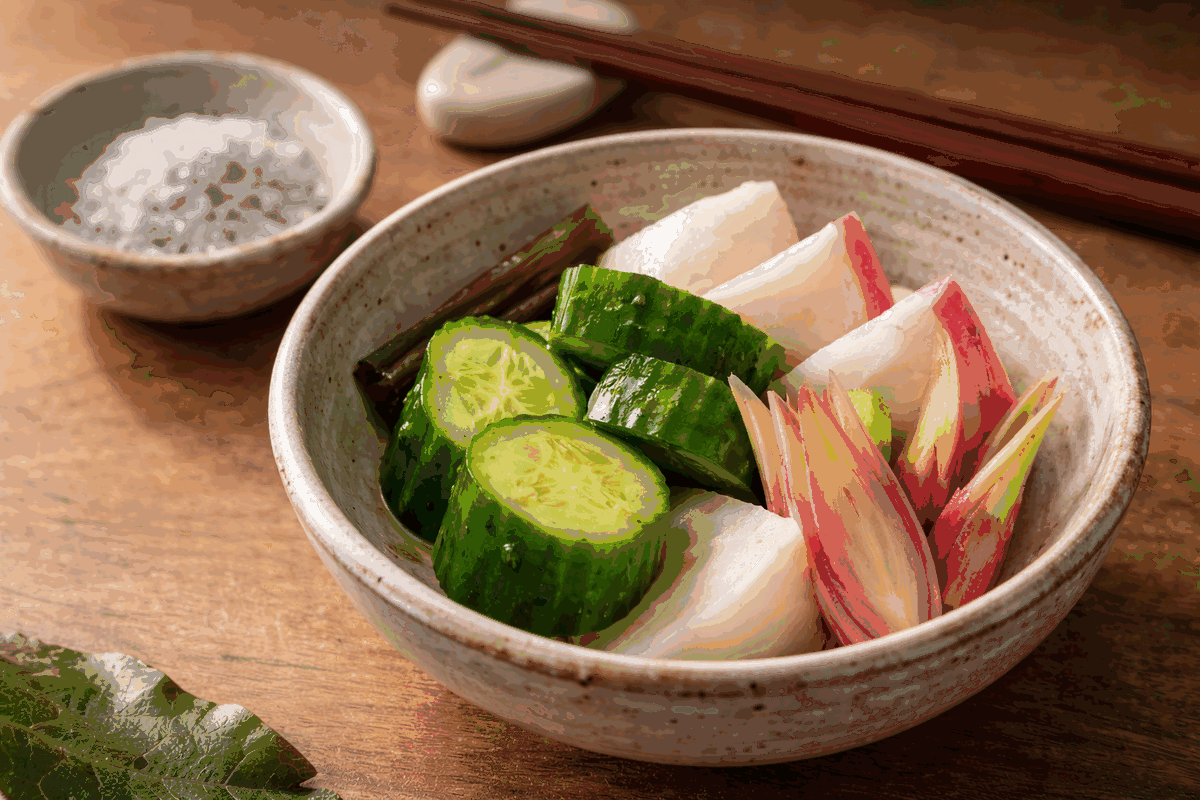
Pickled with Guérande sel fin, the vegetables keep their bright color while their natural sweetness comes forward. A quiet companion to the everyday table.
INGRÉDIENTS
- Cucumbers … 2
- Turnips … 2
- Myoga ginger … 2
- Sel fin … 2 tsp (about 2% of the vegetables' weight)
- Kombu (5cm square) … 1 piece
- Dried chili … 1 (optional)
PRÉPARATION
- Slice the cucumbers thinly on the bias, peel and cut the turnips into thin wedges, and halve the myoga lengthwise.
- Put the vegetables in a bowl and sprinkle the sel fin evenly over them.
- Add the kombu and chili, and massage gently.
- Transfer to a zip-top bag, press out the air, and pickle for 30 minutes to an hour.
- Squeeze out the excess moisture lightly and serve.
CHEF'S POINT
Quick pickles show the quality of the salt directly. Refined salt tends to push only the saltiness forward, but the gentle bitterness of the magnesium in sel fin complements the vegetables' sweetness. Use salt at about 2% of the vegetables' weight. From there, the glutamates in the kombu lift the savory depth. Swap the vegetables with the seasons and enjoy it all year round.
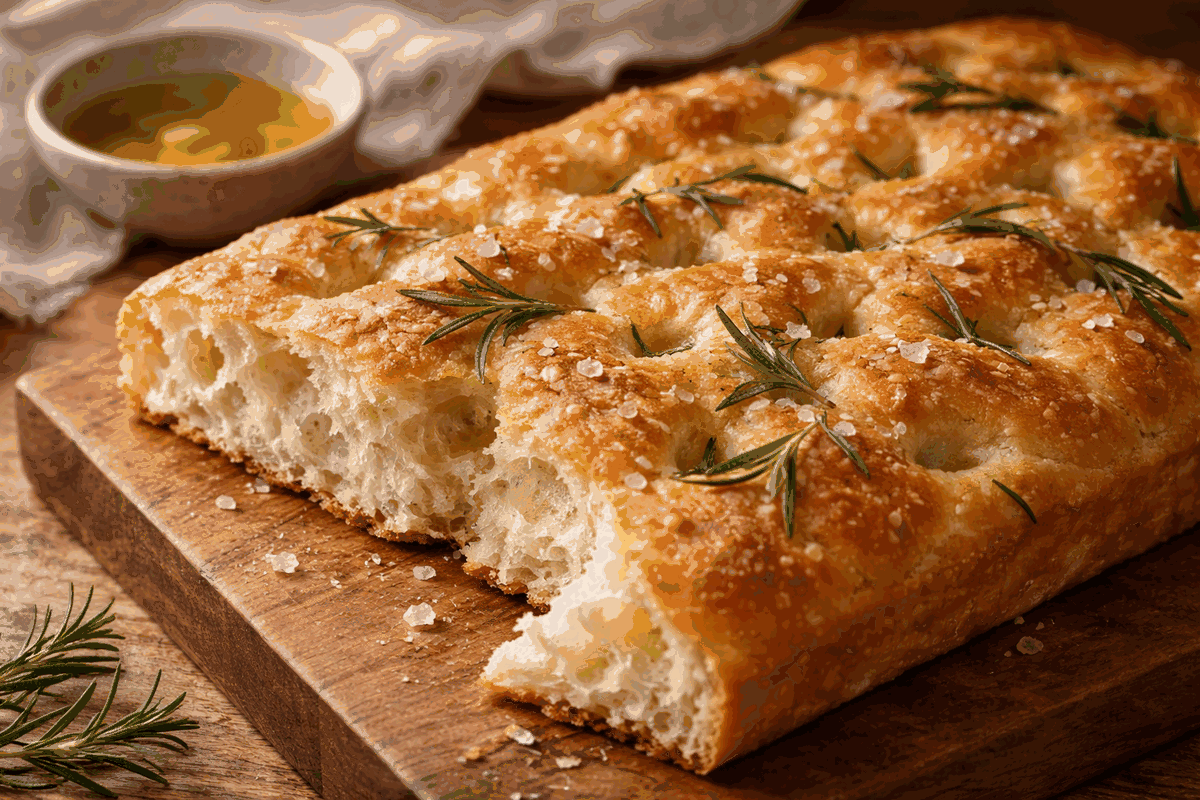
Gros sel in the dough, fleur de sel across the top. The contrast between the two salts is the secret to this focaccia.
INGRÉDIENTS
- Bread flour … 300g
- Warm water … 210ml
- Dried yeast … 5g
- Gros sel … 6g (for the dough)
- Fleur de sel … to taste (for topping)
- Extra-virgin olive oil … 3 tbsp + more to finish
- Rosemary … 2 sprigs
PRÉPARATION
- In a bowl, combine the bread flour, dried yeast, and gros sel. Add the warm water and bring it together into a single mass.
- Knead on the work surface for about 10 minutes. Add 1 tbsp of olive oil and knead further until the dough is smooth.
- Place in a bowl, cover with plastic wrap, and prove in a warm spot for 1 hour, until doubled in size.
- Oil a baking tray and spread the dough out. Dimple it all over with your fingers.
- Drizzle generously with olive oil and scatter over the rosemary leaves. Rest for 20 minutes.
- Bake in an oven preheated to 220°C for 15–18 minutes, until the surface is golden.
- Sprinkle fleur de sel over the top straight out of the oven and serve.
CHEF'S POINT
Always use gros sel in bread dough. It tightens the gluten more gently than refined salt, giving a chewy, tender crumb. And the fleur de sel goes on while the bread is still hot — the residual heat lets it dissolve just slightly and set, while the crystal crunch remains. That "crisp, chewy, then a burst of salt" is exactly what makes focaccia.
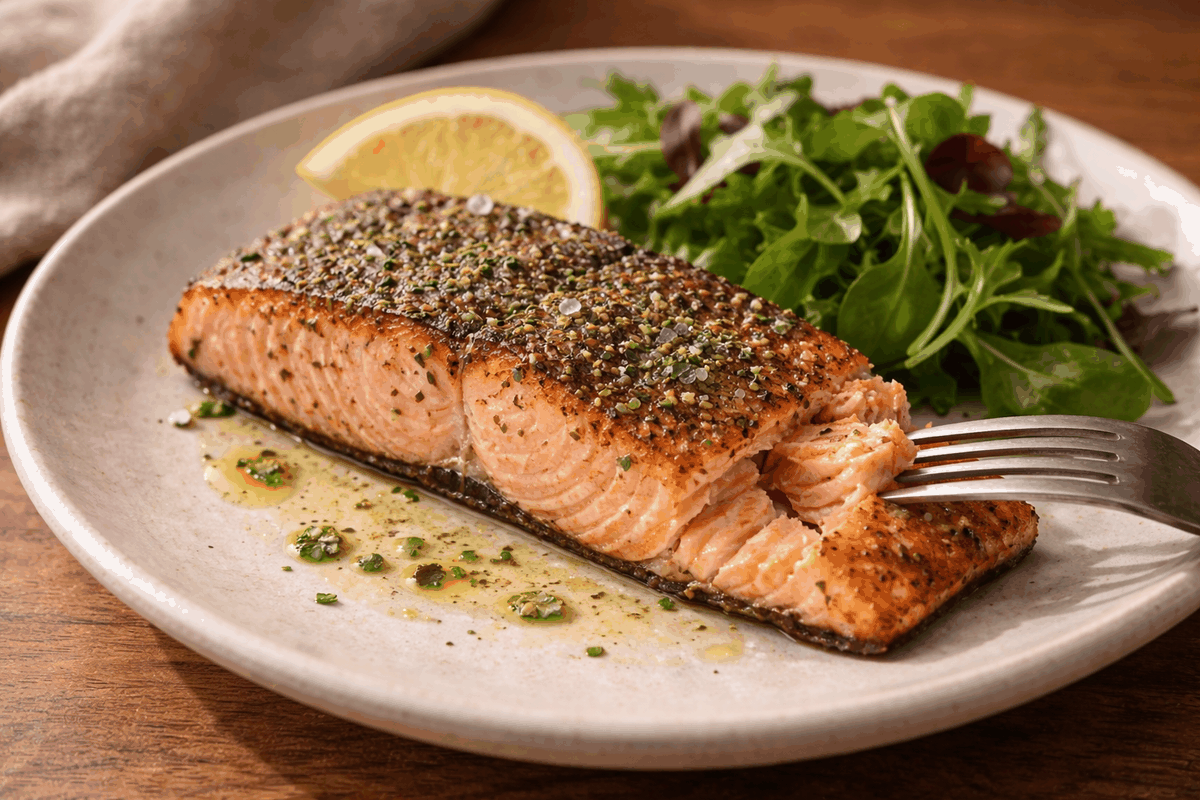
Guérande herb salt blends six organic herbs into one. Just a shake brings restaurant flavor to the plate — a lifesaver on a busy night.
INGRÉDIENTS
- Salmon fillets … 2
- Herb salt (Sel marin aux herbes) … 1 tsp
- Olive oil … 1 tbsp
- Lemon … 1/2
- Baby greens … to taste
PRÉPARATION
- Season both sides of the salmon evenly with herb salt and leave for 10 minutes.
- Heat the olive oil in a frying pan and cook the salmon skin-side down over medium heat for 4 minutes.
- Turn it over, lower the heat, and cook for 3 minutes more, until the center is faintly rosé.
- Lay the baby greens on a plate, set the salmon on top, and finish with a squeeze of lemon.
CHEF'S POINT
This herb salt carries parsley, basil, rosemary, thyme, bay, and tarragon — six herbs in one, so it seasons a dish completely on its own. During the 10-minute rest, the herb fragrance settles into the fish, and it doubles in aroma as it cooks. It's just as good on grilled chicken thighs. Any dish where you'd reach for MSG can be made with this instead.
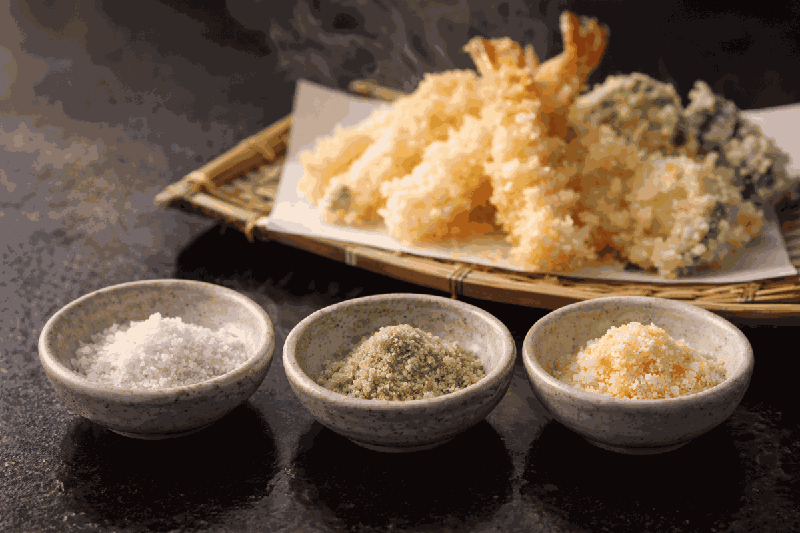
Tempura eaten with salt rather than dipping sauce. Three variations built on fleur de sel — a new way to enjoy tempura.
INGRÉDIENTS
- ① Plain salt
- Fleur de sel … 2 tsp
- ② Matcha salt
- Fleur de sel … 2 tsp
- Matcha powder … 1/2 tsp
- ③ Yuzu salt
- Fleur de sel … 2 tsp
- Yuzu zest (grated) … 1 tsp
PRÉPARATION
- ① Plain salt: simply mound the fleur de sel in a small dish. Perfect for shrimp and whiting tempura.
- ② Matcha salt: mix the fleur de sel and matcha powder thoroughly. Lovely with vegetable tempura — especially maitake mushroom and sweet potato.
- ③ Yuzu salt: mix grated yuzu zest into the fleur de sel and work it in with your fingertips. Try it with white fish or lotus root tempura.
- Mound each into its own dish and serve alongside the tempura, fresh from the fryer.
CHEF'S POINT
If you're eating tempura with salt, fleur de sel is the only choice — because of how it dissolves. Refined salt is repelled by the oil in the batter and tends to clump, but the thin, flaky crystals of fleur de sel cling to the coating and melt evenly in the mouth. Hot tempura straight from the fryer, cold crystals of salt: that contrast in temperature is part of the flavor. Mix the salts just before serving — the yuzu salt especially loses its fragrance quickly.
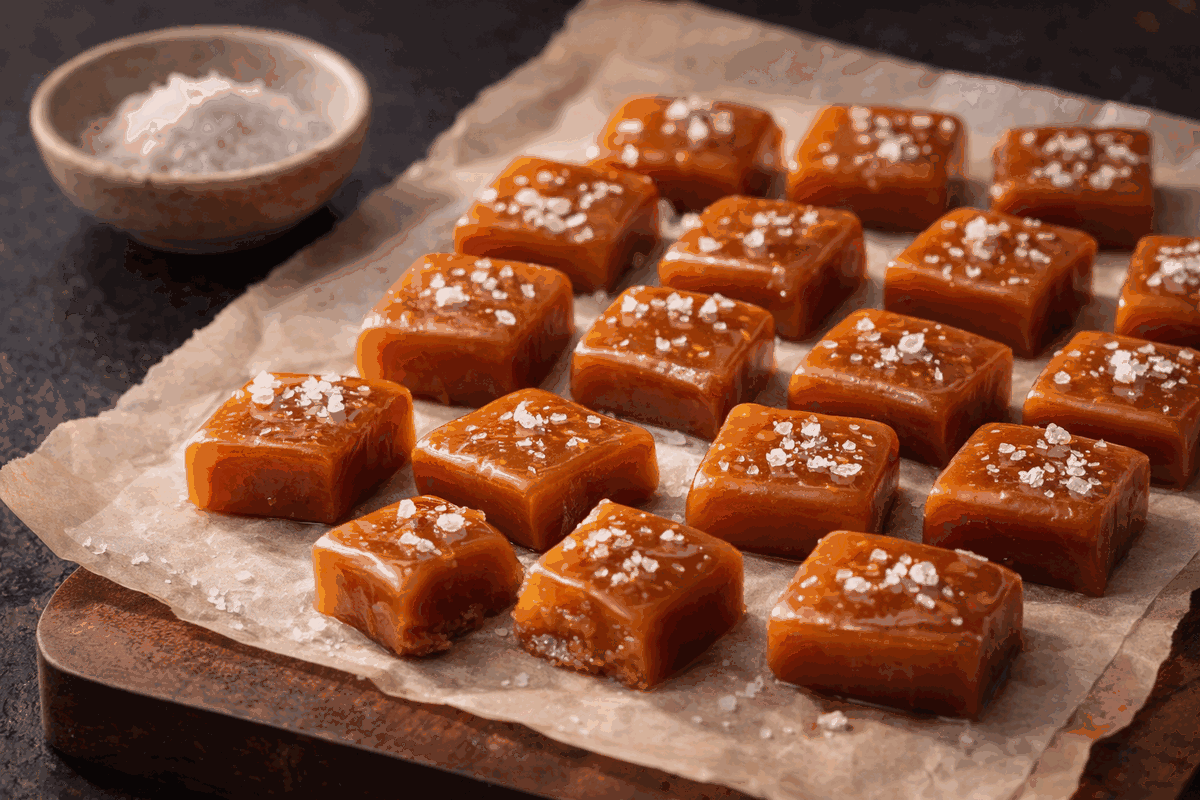
The famous salted-butter caramel of Brittany. Made with the very same fleur de sel as in its homeland — a sweet, salty morsel of pure bliss.
INGRÉDIENTS
- Granulated sugar … 200g
- Heavy cream (35%) … 200ml
- Unsalted butter … 30g
- Fleur de sel … 1 tsp (for the caramel)
- Fleur de sel … to taste (to finish)
- Water … 2 tbsp
PRÉPARATION
- Put the sugar and water in a saucepan over medium heat. Don't stir — wait for it to take on color.
- Once it reaches a deep amber, take it off the heat and add the warmed cream a little at a time (it will bubble up violently, so take care).
- Return to low heat and stir in the butter and 1 tsp of fleur de sel.
- Cook down to 115°C (a thermometer is recommended). It's ready once it reaches a thick, syrupy caramel.
- Pour into a parchment-lined mold, and once the worst of the heat has gone, sprinkle fleur de sel over the surface.
- Chill in the fridge for 2 hours to set, then cut into pieces of your liking.
CHEF'S POINT
Salted caramel made with Guérande fleur de sel is the Breton classic itself. The key is using the salt in two stages — salt dissolved into the caramel builds the base of the flavor, while the crystals scattered on top become a textural accent. Caramel temperature is best at 115°C. Go over and it turns hard like candy; too low and it stays saucy and won't set. A thermometer is essential.