Brittany and the Bisque of the Sea

Bisque — From Fisherman's Wisdom to French Culinary Icon

Brittany lies at the northwestern edge of France — a coast of waves breaking on rock, salt marshes swaying in the sea wind, and a dish born of fishermen's wisdom that became one of the pinnacles of French cuisine. More than a soup, it is the story of the sea distilled into a single spoonful: a culture in itself.

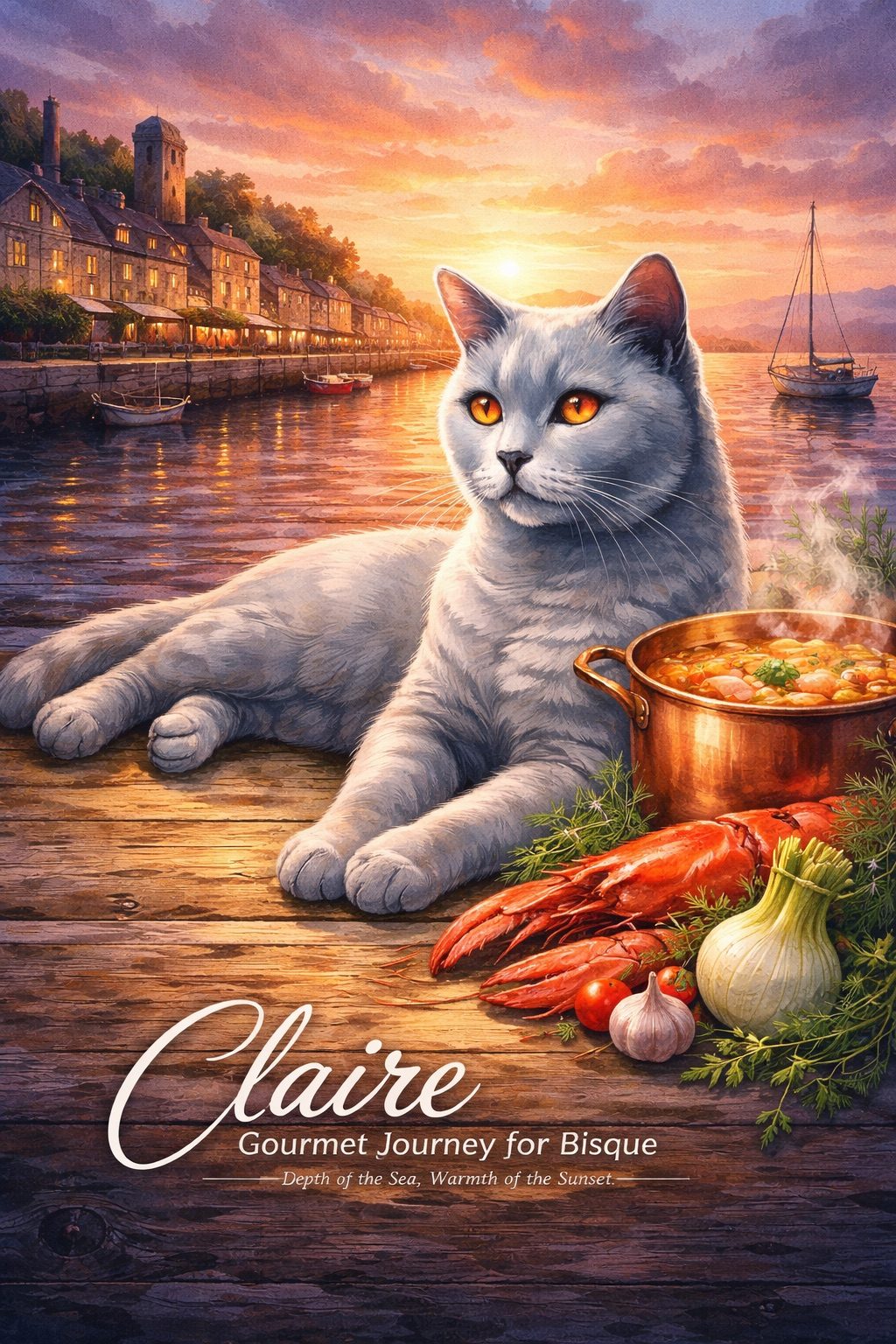
Navigator Claire
Your Navigator — Claire

Welcome to the country of the sea. I'm Claire, a Chartreux — a cat born in a Breton harbor town, and I'll be your guide to this coast's table. The sound of waves on the rocks, the wisdom of the fishermen, and a single bowl of soup that uses everything, right down to the shells. Come, let me take you into the story of “eating the sea.”

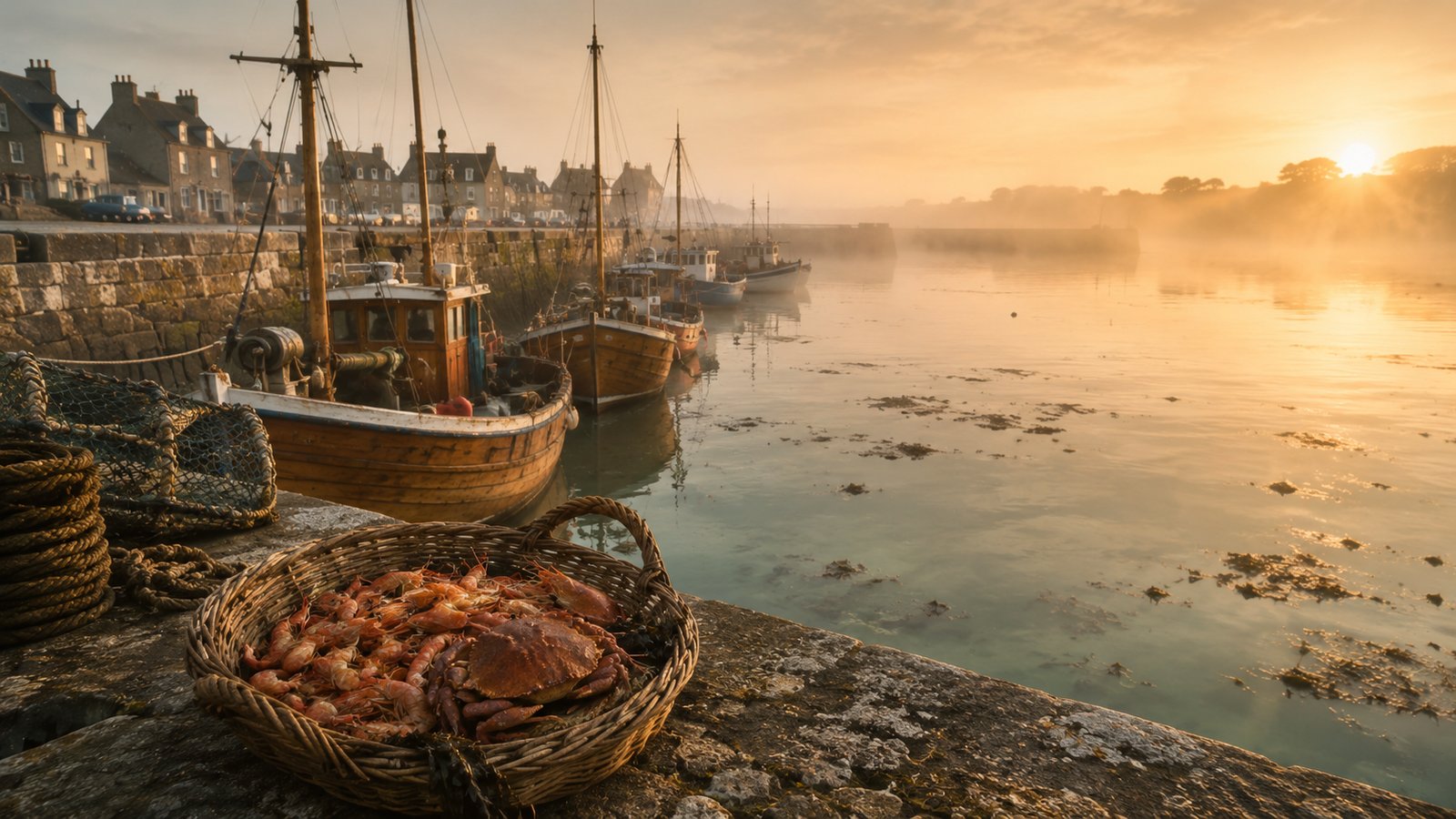
A Brittany fishing port at first light — wooden boats, baskets of crab, and a stone-walled harbor town wrapped in dawn mist

A Brittany Dawn — Wooden Boats, Sea Mist, and the First Catch

The Sea's Bounty — France's Foremost Fishing Coast

The Atlantic bounty of Brittany

Brittany is one of France's great fishing regions. The riches the Atlantic yields here are not merely ingredients — they are woven into the very flesh and blood of the people who live by this coast.

Lobster, langoustine, oysters from Cancale, oysters from Belon, scallops, mussels, sardines — these are the voice of this sea, learned by heart over generations of fishermen.

What gives bisque its origin, above all, are the shells of shrimp and crab too small to sell. Rather than discard them, the cooks here reduce them, strain them, and finish with cream. In that process, every last note of these small sea creatures is reborn as a single bowl of soup.

Bisque is Brittany's maritime philosophy of wasting nothing. A wisdom born of scarcity now stands at the very summit of French cuisine.

The Kingdom of Salted Butter

Where salted butter is a way of life

In a France where unsalted butter is the norm, Brittany stands apart for its devotion to salted butter. The reason reaches back to the medieval gabelle — the royal monopoly tax on salt.

From the 17th to the 19th century, the French crown levied a heavy tax on salt. Brittany, however, was one of the few regions exempt from it. The salt marshes of Guérande produced enough on their own that the region fell outside the tax's reach. As a result, Breton cooks folded generous amounts of Guérande salt into their butter — and in time, that became a tradition all its own.

Kouign-amann (a square butter cake), salt-cured pork, buckwheat galettes rich with butter — all of them rest on this culture of salted butter. A Breton dish is complete only when crystals of salt dissolve into the richness of the butter.

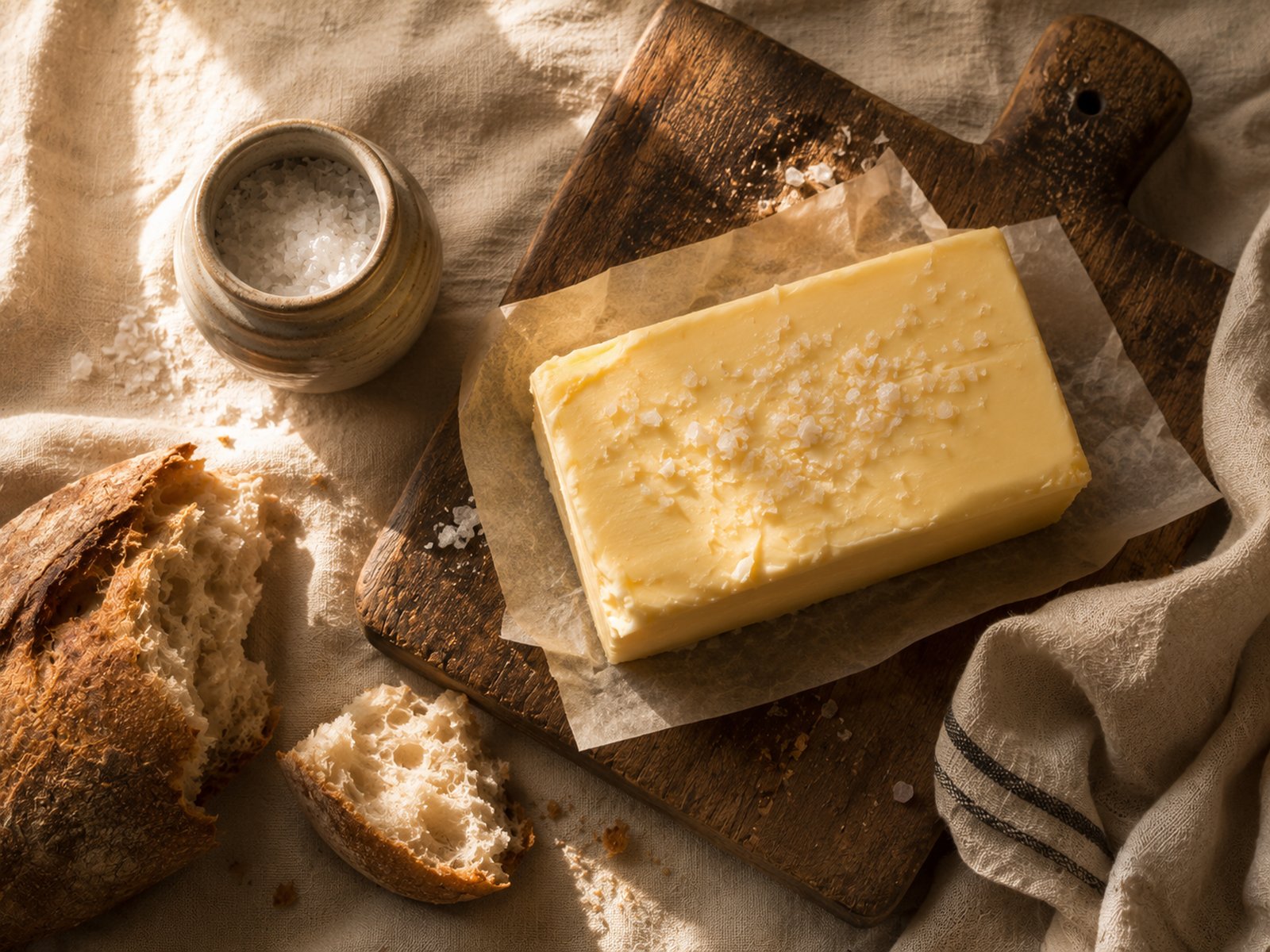
Breton salted butter — a still life of a golden block of butter scattered with crystals of fleur de sel

Beurre Salé — Where Butter and Sea Salt Become One

The Salt of Guérande — A Thousand Years of Salt Marshes

Fleur de sel: The soul of Breton cuisine

At Brittany's southern tip lies the Guérande peninsula, where salt marshes have spread for more than a thousand years. What sways in the wind here is not simply salt — it is time made crystalline.

The artisans known as paludiers repeat the same gestures day after day. From spring through autumn, they draw the salt-laden waters of the Atlantic into the marshes and wait for sun and wind to do the work of evaporation. The first crystals to rise to the surface in that process are the fleur de sel — the flower of salt.

NAC Inc. has been bringing this Guérande salt to Japan since 1997. For nearly thirty years it has carried forward the tradition of Guérande salt, delivering it to the tables of a country with a long food culture of its own. This is not mere "importing" — it is the meeting of two maritime civilizations.

Without the salt of Guérande, there would be no Breton cooking, and no bisque. And the journey NAC Inc. has built since 1997 has been a quiet revolution — to root a thousand years of Guérande's crystals into the Japanese table.

The Birth of Bisque — The Wisdom of Wasting Nothing

From waste to France's finest

Today, "bisque" means a rich, elegant soup drawn from the shells of shrimp, crayfish, and crab. Its essence lies in a wisdom of wasting nothing — using even the shells that would ordinarily be thrown away. Small shrimp and crab too modest to sell, their shells simmered for hours: that is where the magic of bisque begins.

The shells are sautéed, wine is poured in, and everything simmers together with onion, carrot, and celery. The liquid is then strained, patiently, through fine cloth. And at the very end, butter and cream are added. That is the moment the magic happens — every note of flavor, every drop of richness and aroma from these small sea creatures is transformed into a soup at once deep and refined.

The origin of the name "bisque" is uncertain — perhaps the Bay of Biscay in southwestern France, perhaps the French bis cuites, meaning "twice cooked." What is certain is that this wisdom of using everything down to the shell rose, in time, to become one of the supreme achievements of French cuisine.

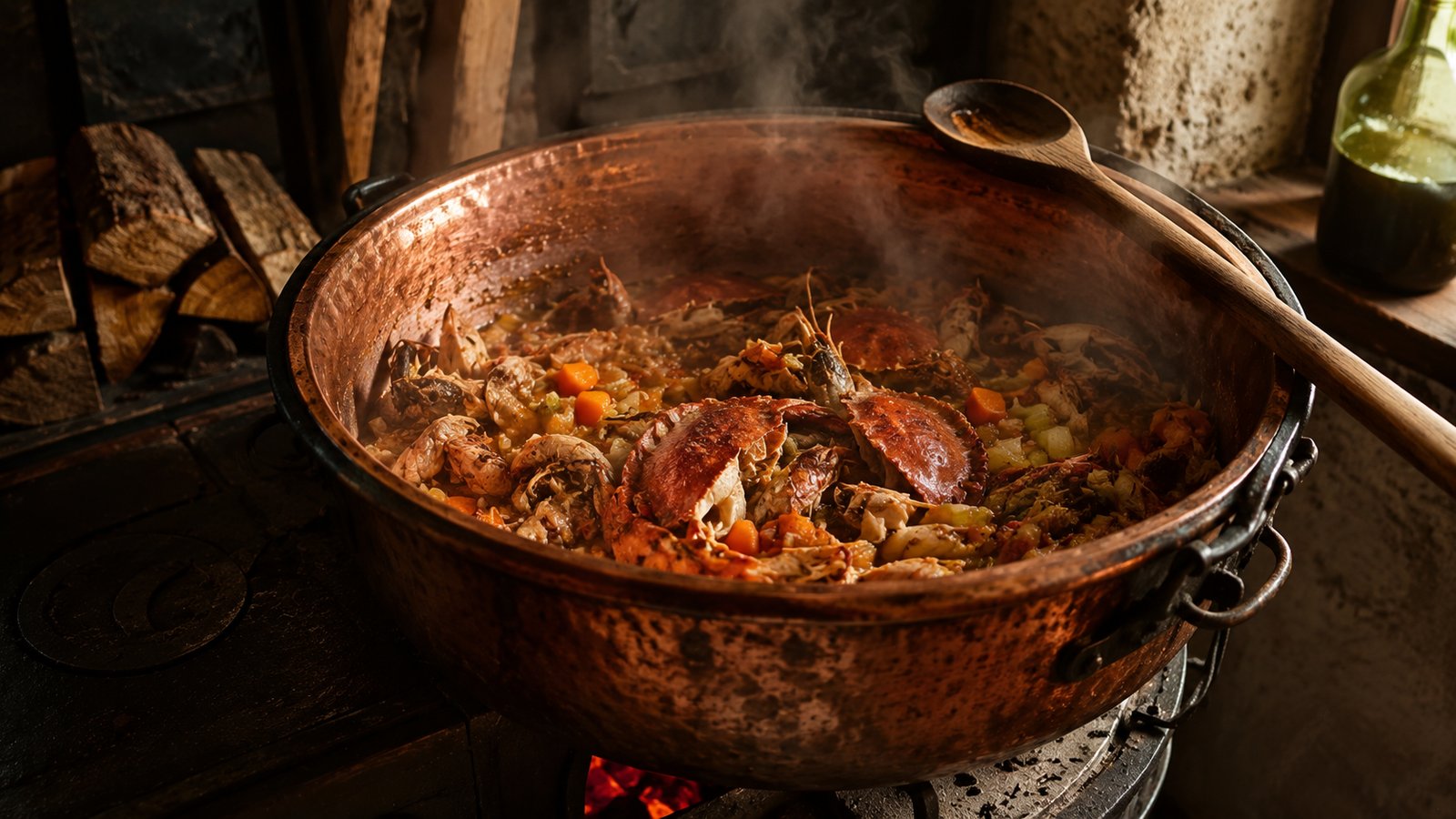
The original form of bisque simmering in a copper pot — crab shells and mirepoix vegetables turning slowly to magic over a wood fire

The Alchemy of Bisque — Shells, Wine, and Time

A Surprising History — The First Bisque Was Pigeon

From game to the sea

In 1651, François La Varenne — often called the father of French cuisine — published Le Cuisinier françois, and in it "bisque" appears for the first time. And what was it then? Not shrimp, but pigeon.

Pigeon meat, finely pounded, strained, and enriched with cream — that was the earliest form of bisque. From there, the method spread to chicken, to rabbit, and to the wild game of the hunt.

A record from the 1690s puts it this way: "Bisque is the finest of luxuries, served only at the tables of great lords." In other words, the first bisque was a nobleman's dish, born of the spoils of the hunt.

So why did it shift from "pigeon" to "the gifts of the sea"? The key lay in the very heart of bisque — the technique of drawing out flavor by simmering down shells and bones. The shells of shrimp, crayfish, and crab, when sautéed and infused, yield a depth of flavor far greater than meat alone, along with a beautiful crimson hue. Along the Atlantic coast — in Brittany and other shores rich in crustaceans — this technique met the bounty of the sea. And so, from the late 17th into the 18th century, bisque took on its new form as a rich soup of crayfish and lobster, and the "bisque of the sea" we know today was complete.
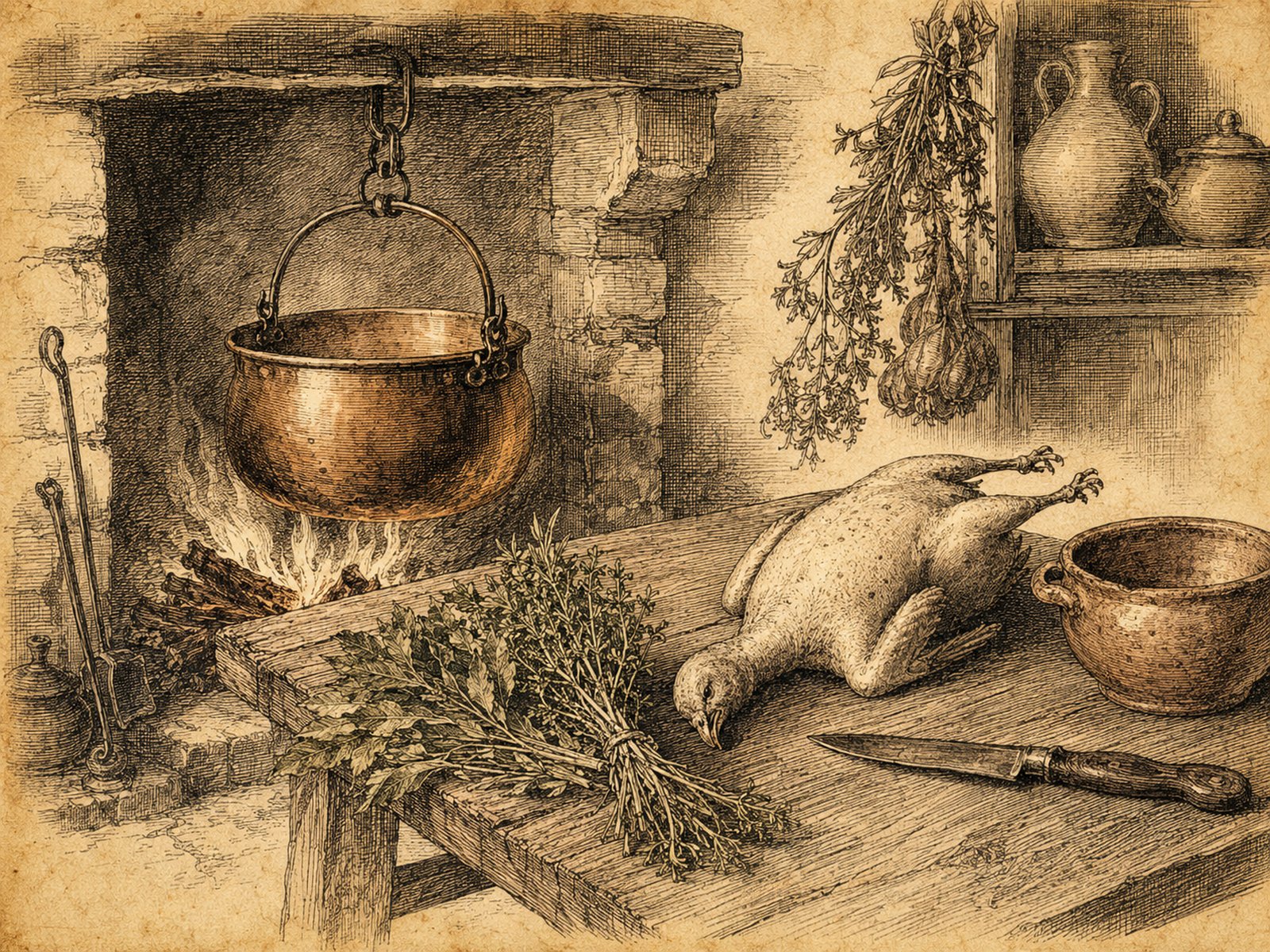
A 17th-century French kitchen — a copper pot over the hearth and bundles of herbs, a watercolor of the fireside where the first bisque was born

Bisque's First Form — A 17th-Century Hearth

The Craft of Bisque — Four Steps

The four essential steps to mastery

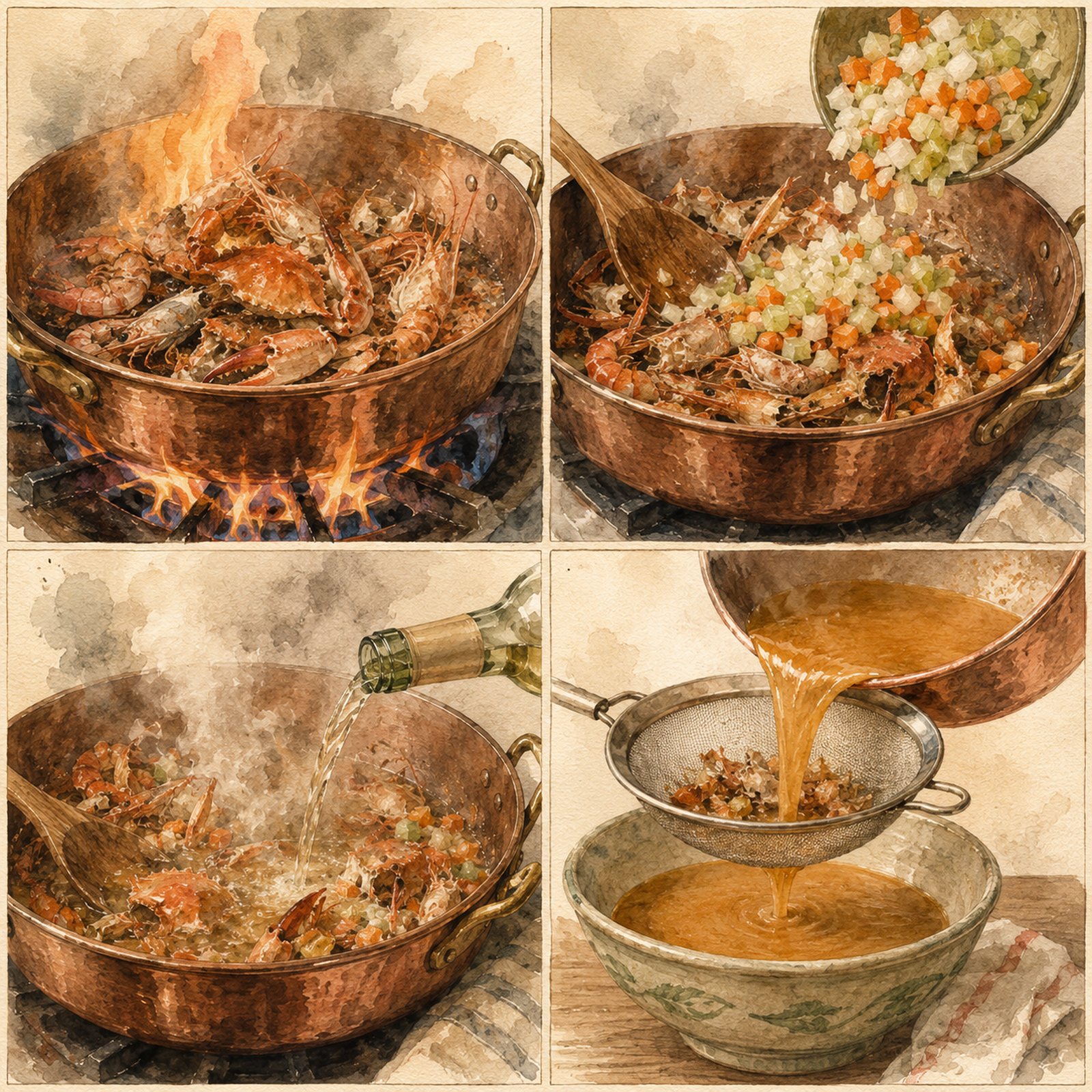
Bisque is built on four certain steps. At each stage, the flavor of the sea's bounty is coaxed further forward, and the richness deepens.

1

Sauté the Shells

Sauté lobster or langoustine shells in butter to draw out their toasted aroma. At this stage, the very essence of the sea creature awakens.

2

Simmer with Wine

Add white wine and simmer with a mirepoix of onion, carrot, and celery. Over several hours, the flavor deepens.

3

Strain Through a Chinois

Strain carefully through fine cloth. Removing the impurities brings out the liquid's clarity and refinement.

4

Finish with Cream

Add butter and cream and emulsify. This step completes the richness and elegance — and bisque is born.

Bisque is a simple dish, yet one that demands perfection at every stage. Within that patient labor lives a reverence for the gifts of the sea.

The four steps of bisque — a four-panel watercolor of searing shells, mirepoix, white wine, and the strainer

Four Steps, One Bisque — A Watercolor Manual

The Connection to French Bisque Voyage

Where Brittany's wisdom meets modern alchemy

NOIX Seasoning's "French Bisque Voyage" is a seasoning that fuses this 17th-century bisque technique with the wisdom of today's fishermen.

Tenshi Ebi Shrimp Shells

The fishermen of modern Brittany still draw flavor from the shells of small shrimp. That tradition, distilled, forms the very core of this seasoning.

The Salt of Guérande

Fleur de sel harvested from thousand-year-old salt marshes. This is the salt that has sustained the Breton table — the medium that brings everything into harmony.

Shell-Roasted Spice

Smoked paprika embodies the very act of bisque's first step — "sauté the shells." Its roasted aroma wraps the whole in warmth.

The balance of onion, carrot, and celery that forms the foundation of mirepoix. The richness of Brittany's salted butter. And the salt of Guérande.

Fusion is harmony. When the food cultures of East and West meet, they do not so much create something new as remind us of how things were always meant to be — that perfect harmony the sea of Brittany has known for thousands of years.

Experience Claire's World

The story of Brittany's sea is distilled into a single shake of seasoning.